
Finding Space in Yvoire
There are times when we don’t need more noise, more plans, or more doing, we simply need space. Space to breathe, to think a little more clearly, and to reconnect with ourselves. It’s often in the quietest places, and in the slower moments, that we find exactly what we didn’t realise we were looking for. On a recent visit to Yvoire, a small medieval village on the shores of Lake Geneva, I found just that.
During the Artemis II mission to orbit the moon, female astronaut Christina Koch commented, when looking back at Earth, “what struck her wasn’t necessarily just Earth, it was all the blackness around it.”
For some reason, this comment really resonated with me. It may seem obvious to say, but we are surrounded by space, and yet there are times in life when that is exactly what we seek.
Space to breathe, to take stock, to reflect, to think, and to just be ourselves.
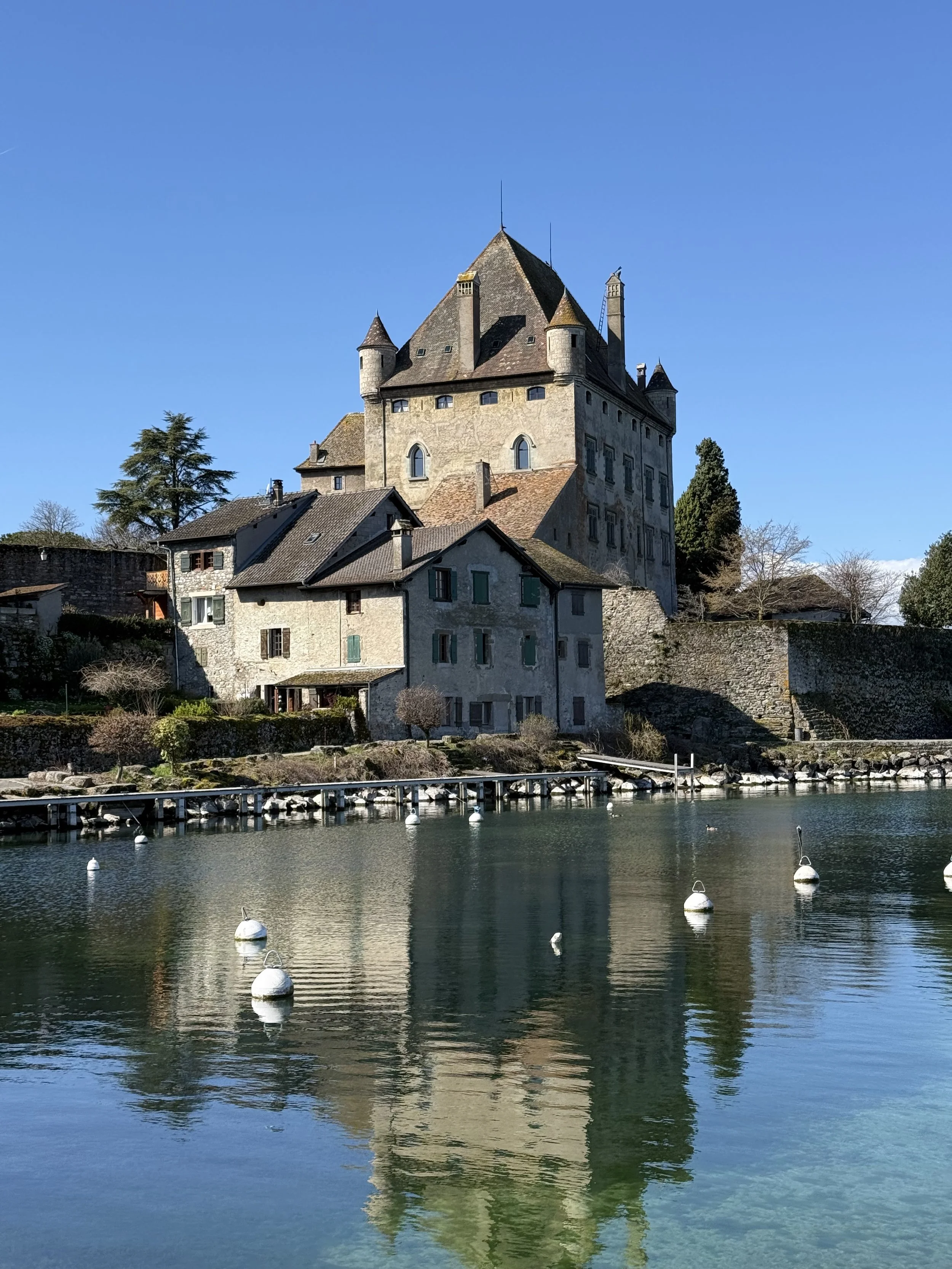
This is exactly what I found when I visited the beautiful 700-year-old medieval village of Yvoire, situated on Lac Léman near Geneva. I was travelling out of season, early March to be exact, but it wasn’t just the lack of people at that time of year, it was more than that.
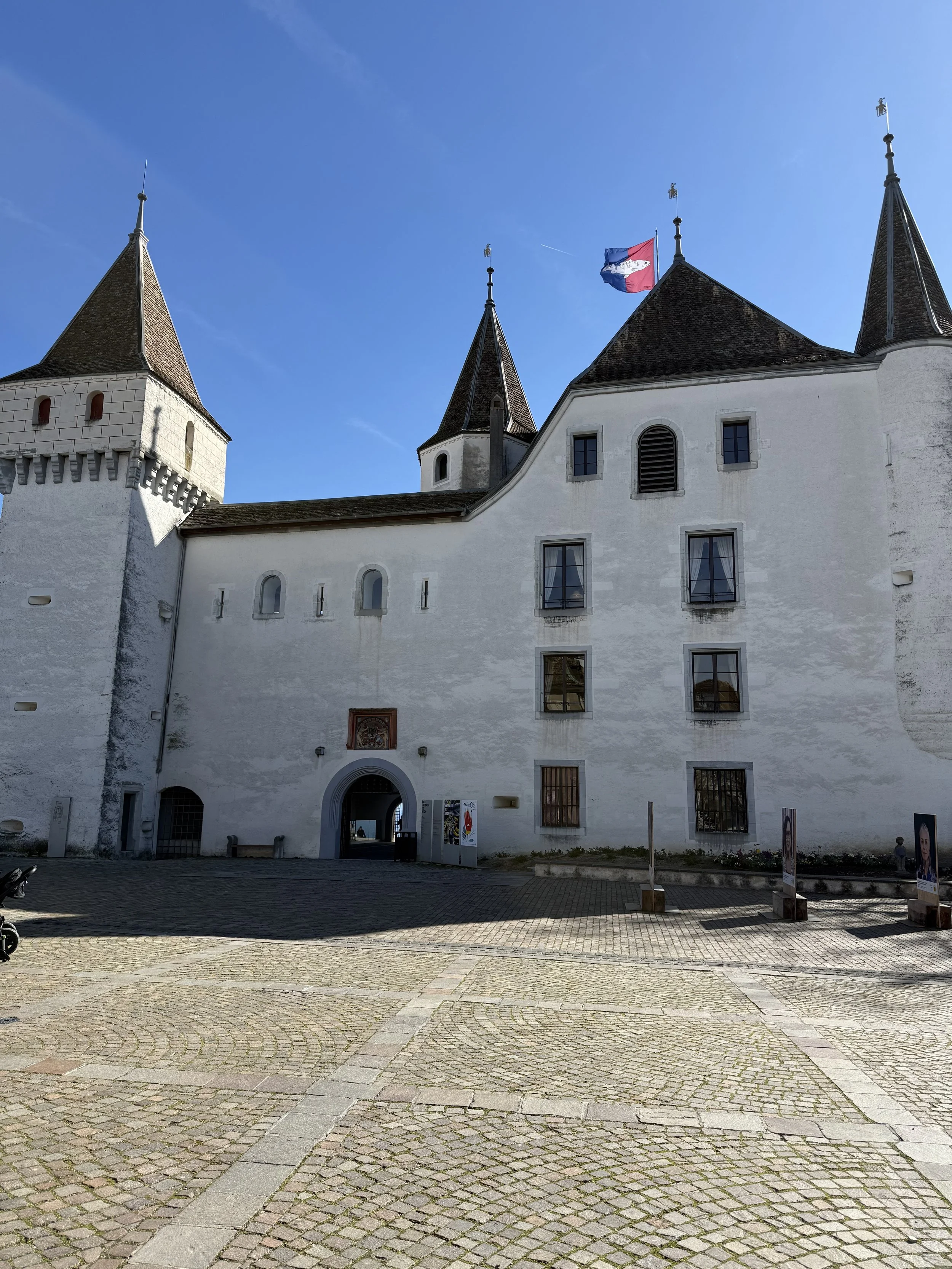
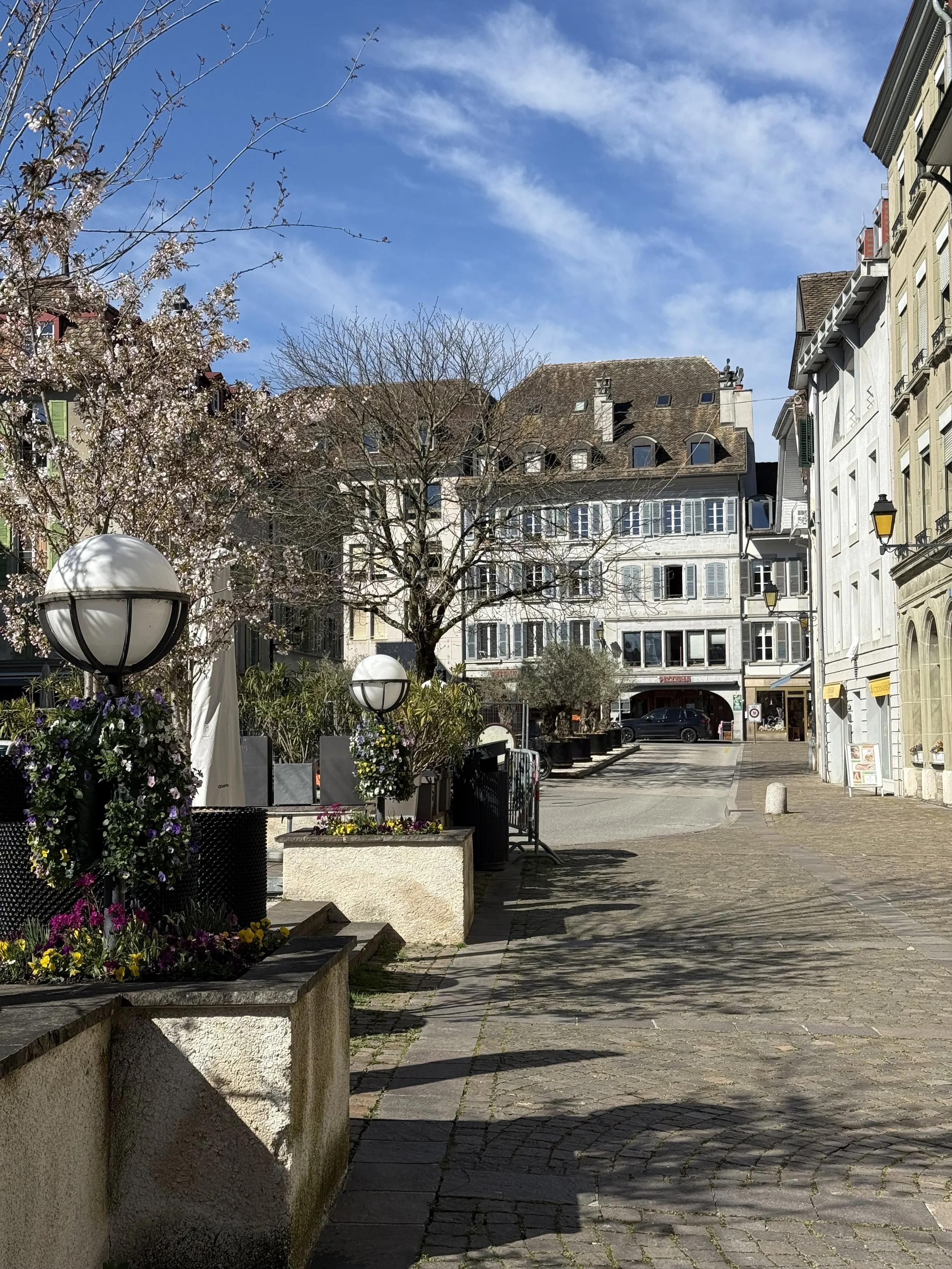
I had taken the train to the nearby town of Thonon-les-Bains and from the station made my way to the Place des Arts, just a five-minute walk away. From there I took the bus to Yvoire. You will need to check timetables, as the buses don’t run that frequently, particularly around the middle of the day, but it is only a 30-minute journey and so quite easy to navigate.
Yvoire is in France, just an hour’s drive from Geneva. It can also be reached by catching the ferry from Nyon in Switzerland. As the bus navigated the modern suburbs of Thonon and the villages in between, it seemed strange to think that a medieval lakeside town was close by. However, soon the landscape changed, becoming more rural, and the direction of travel started to head towards the lake. As you enter Yvoire, you are met with a well-laid-out village, a mix of chalet-style properties and a feeling of space. No immediate sign of anything medieval at all.
As the bus set off, leaving me standing at the bus stop, I looked around me. The very first thing I saw were two shaggy ‘Highland’-style cows. I say “style” as I cannot tell you the breed exactly. However, if you know anything about me by now, you know that I love cows, particularly Highland cows. I knew straight away that I was going to like it here.
I made my way to my hotel for the next two days, a lovely small hotel called Villa Cécile at the edge of the village. As it was out of season, the pool was empty and there were few people staying, but neither were of concern to me. The hotel was welcoming and cosy and, although it was actually really sunny and quite warm outside, I didn’t feel the need to lounge by the pool.
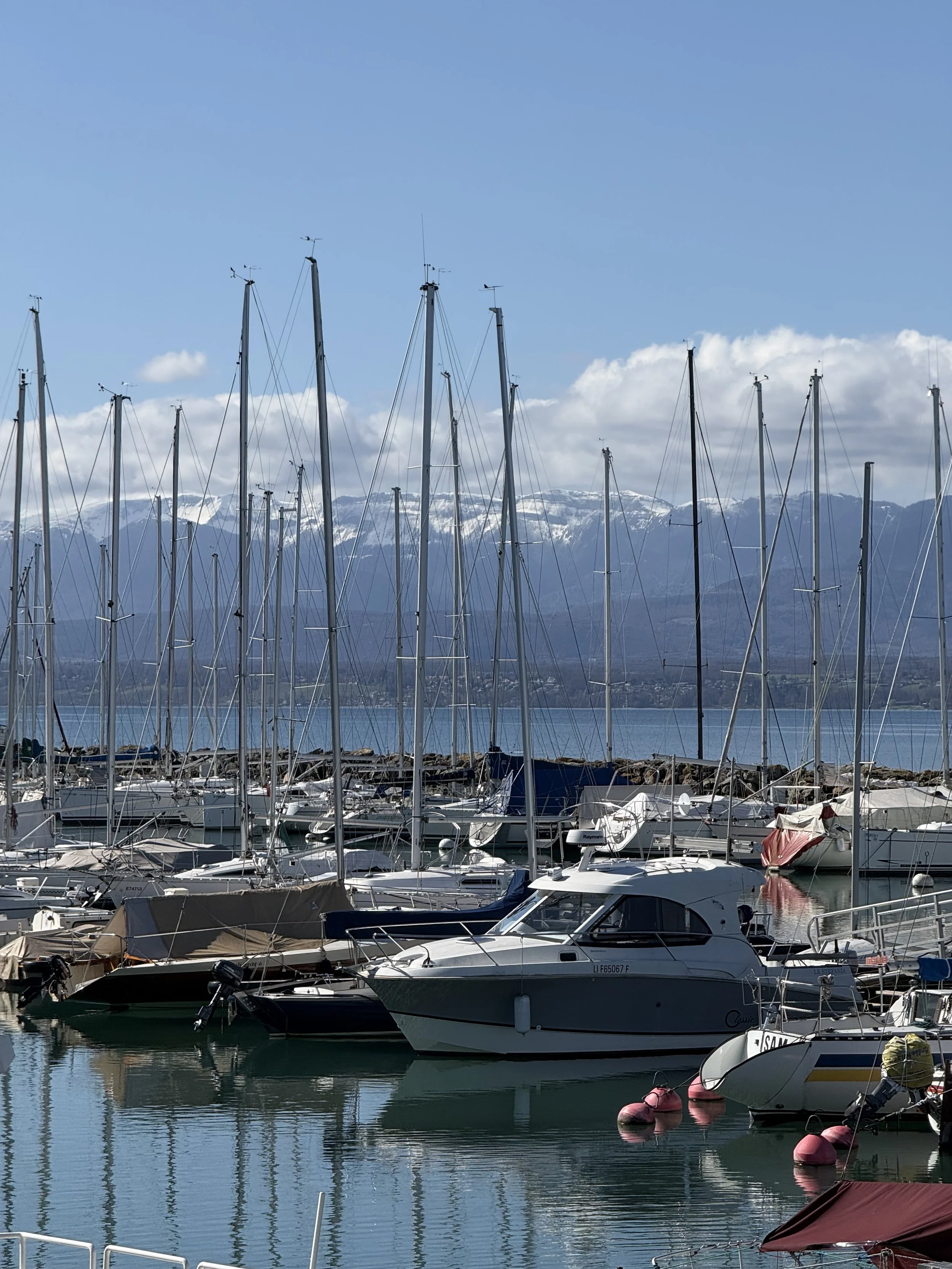
After unpacking, I took myself for a walk into town, which was just a five-minute walk from my hotel. I could access the town from the bottom of the hotel garden and, as I started to stroll along the path, the stunning lake view opened up in front of me. The hotel is elevated and just below was the marina, known as the Port de Plaisance. A number of small yachts and sailing boats were bobbing gently in the early spring sunshine and it felt like I had arrived in the South of France.
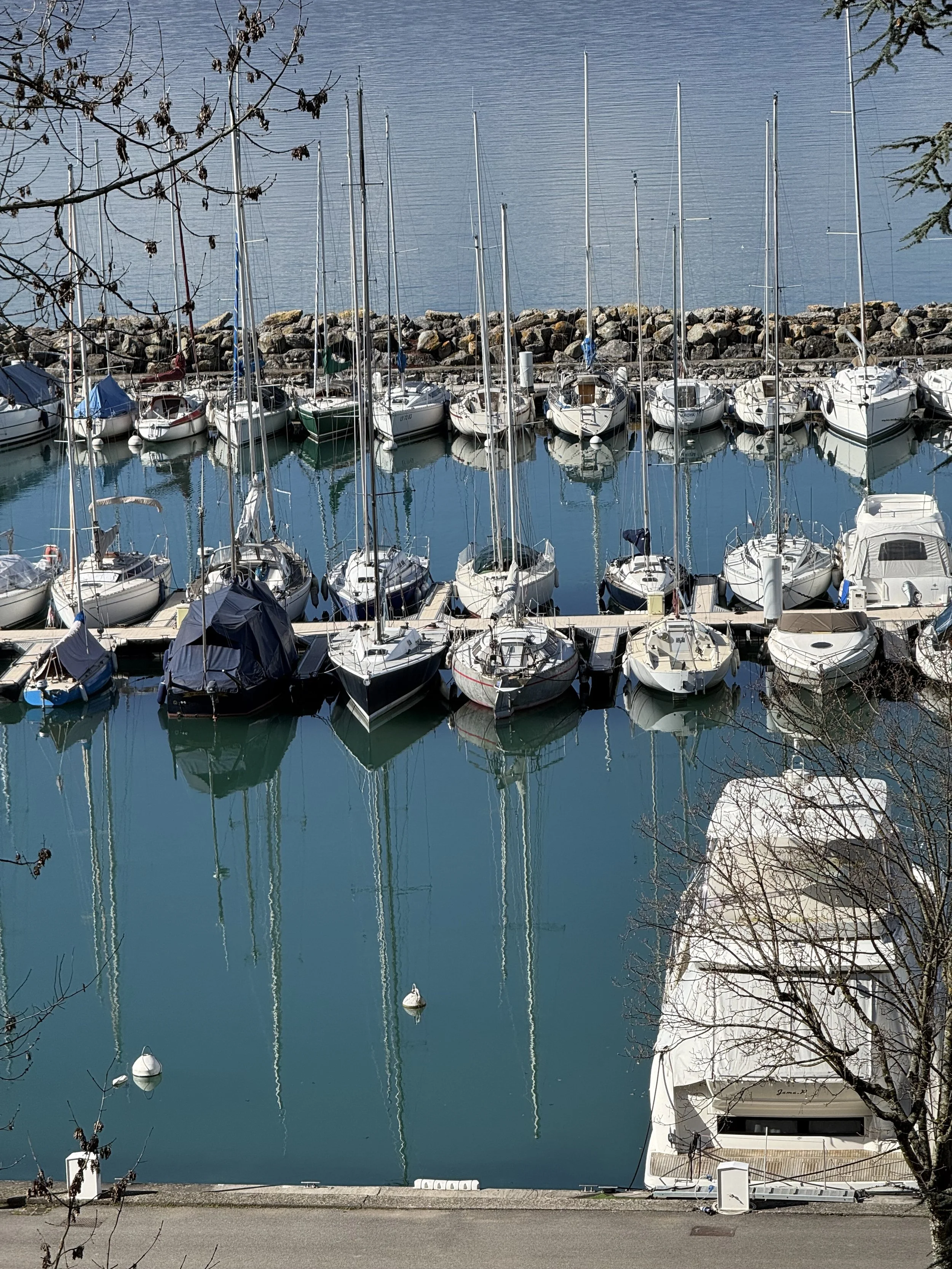
Yvoire has played host to the Les Voiles d’Yvoire for the last two years in October, which brings together classic sailing boats for an annual regatta, and as you walk along the quay, you can discover more about the boats that take part each year.
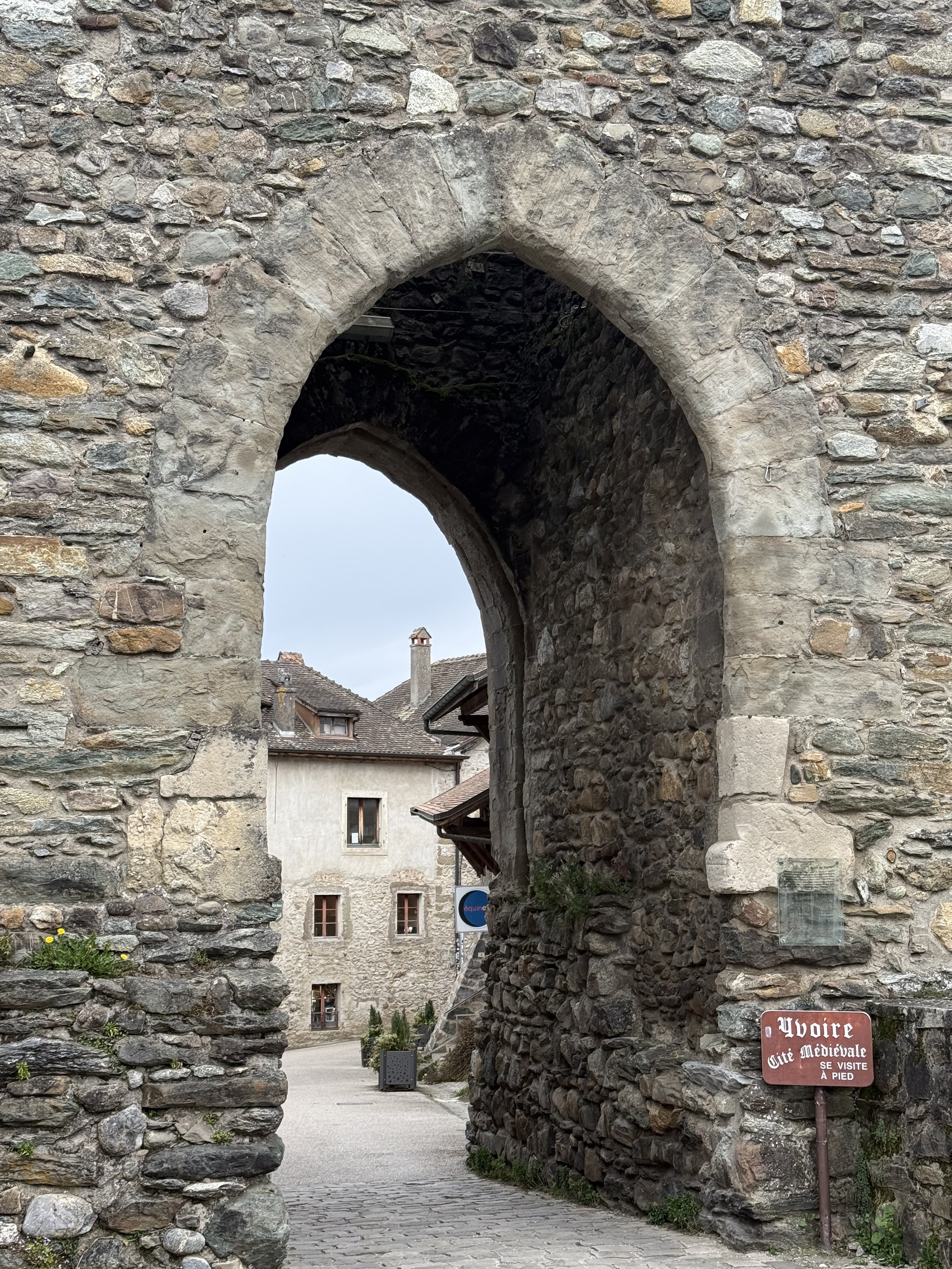
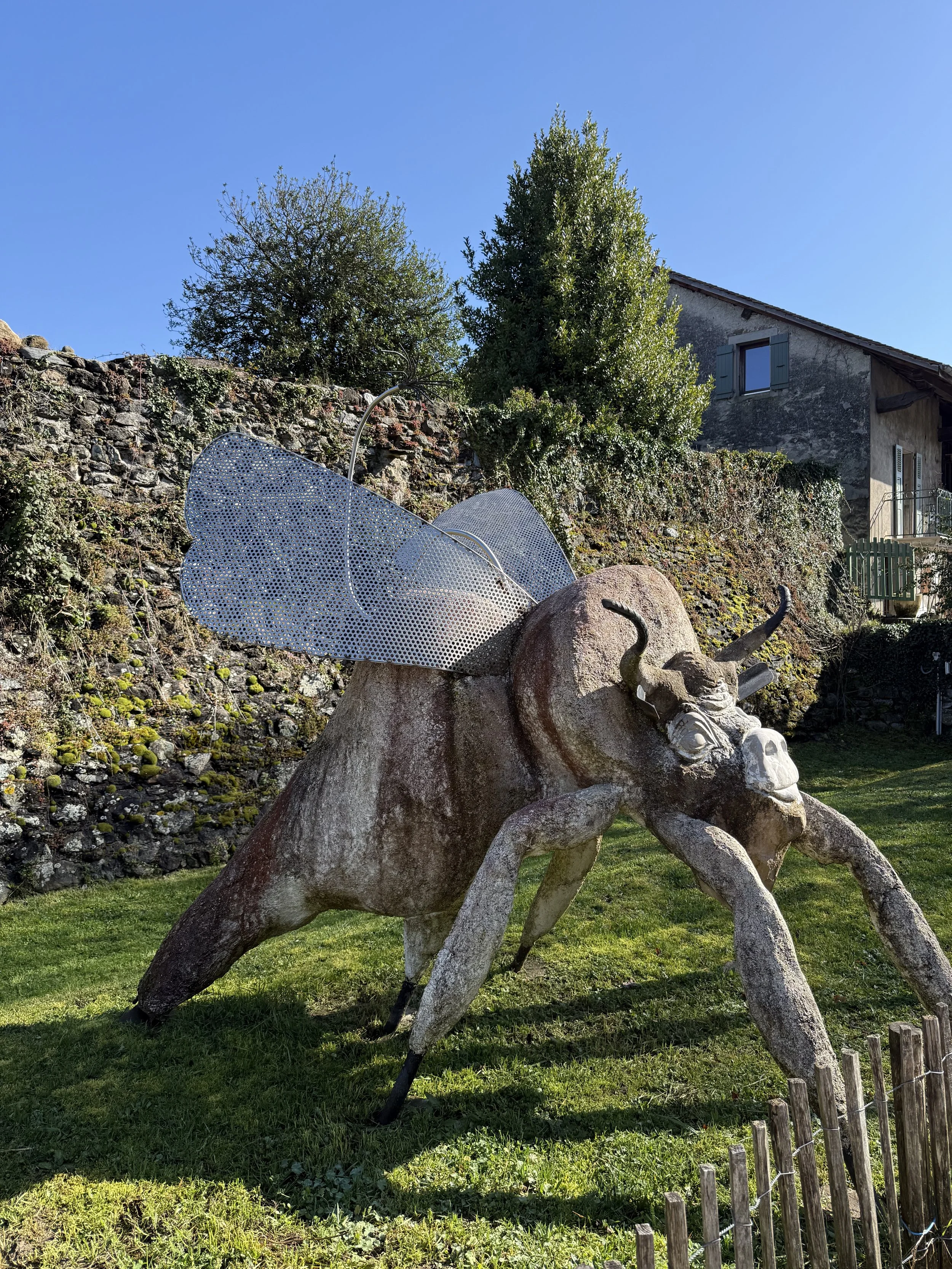
Walking towards the town with the marina below me, a tall arched stone gateway comes into sight, known as the Porte de Nernier. As you get closer, you can see that it is flanked by a large medieval wall which, to my surprise, had a giant fly in front of it. As I ventured closer, I could see that it was a bug garden, complete with a beehive and bug homes created to attract wildlife and to educate. It was a whimsical and thoughtful addition.
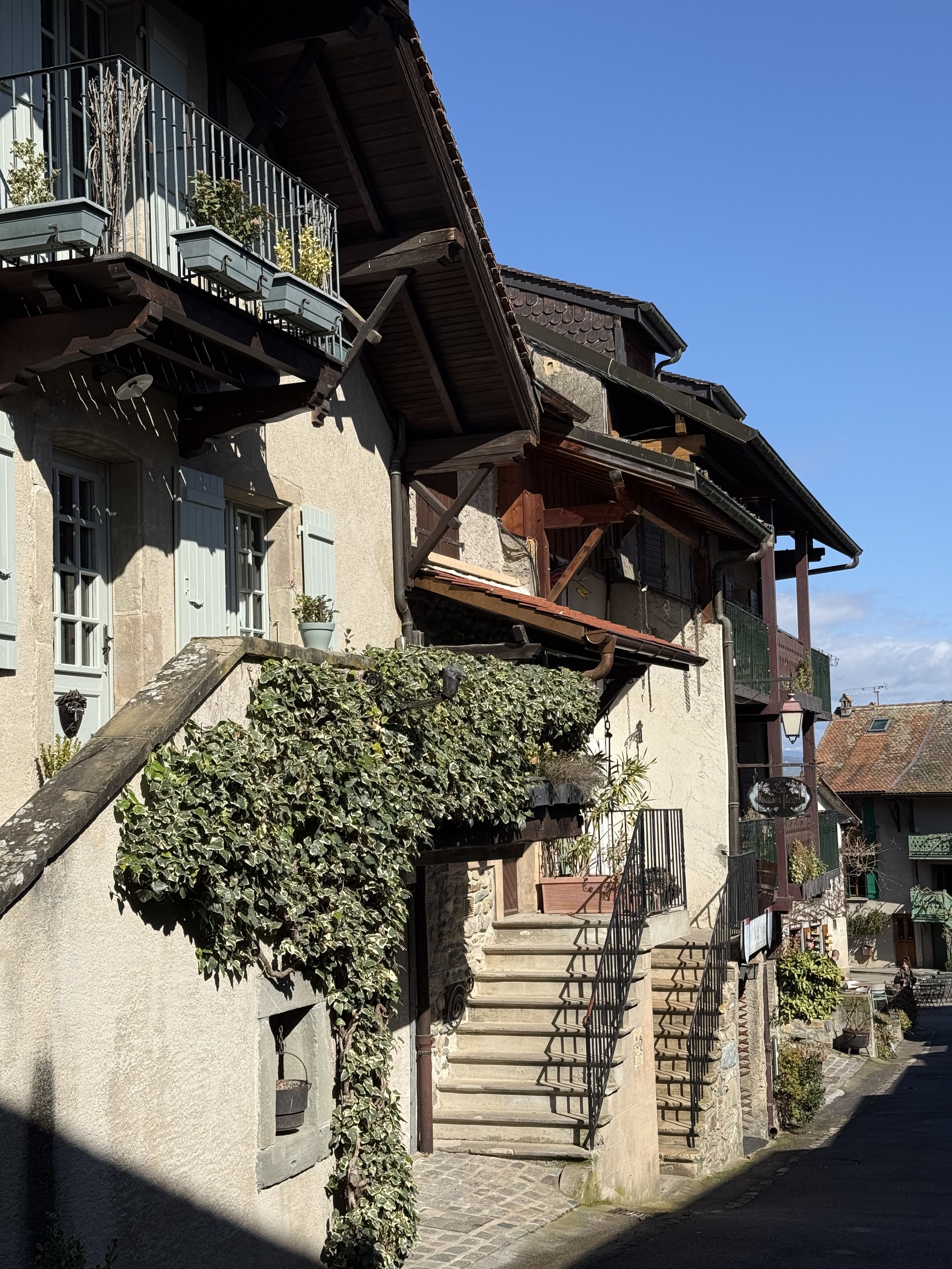
Entering through the Porte de Nernier felt like stepping into another land. What unfolds in front of you are narrow stone streets and paths leading to an array of beautiful stone and wood buildings, each with a charm of their own. In the summer months, the buildings are adorned with flowers.
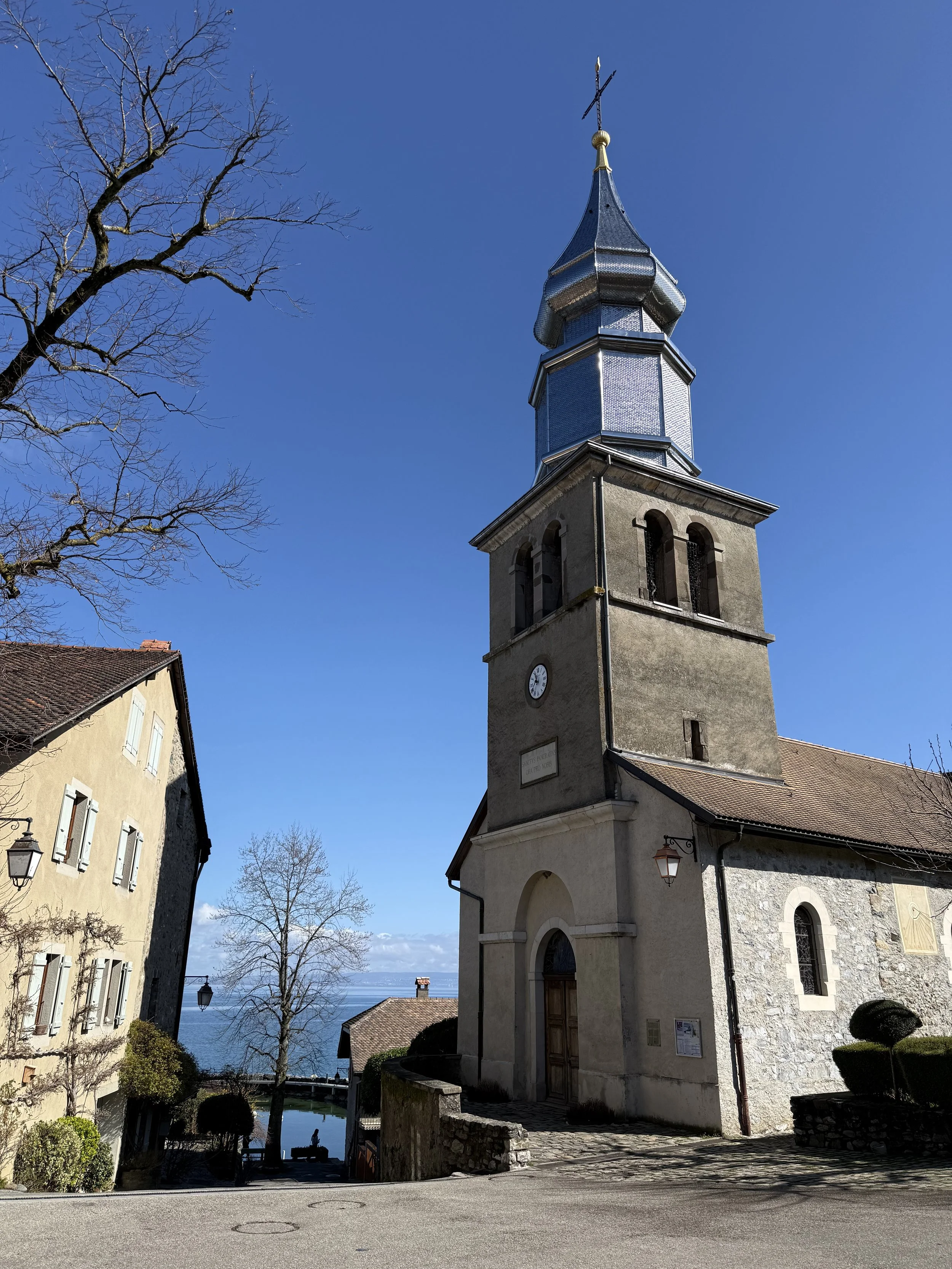
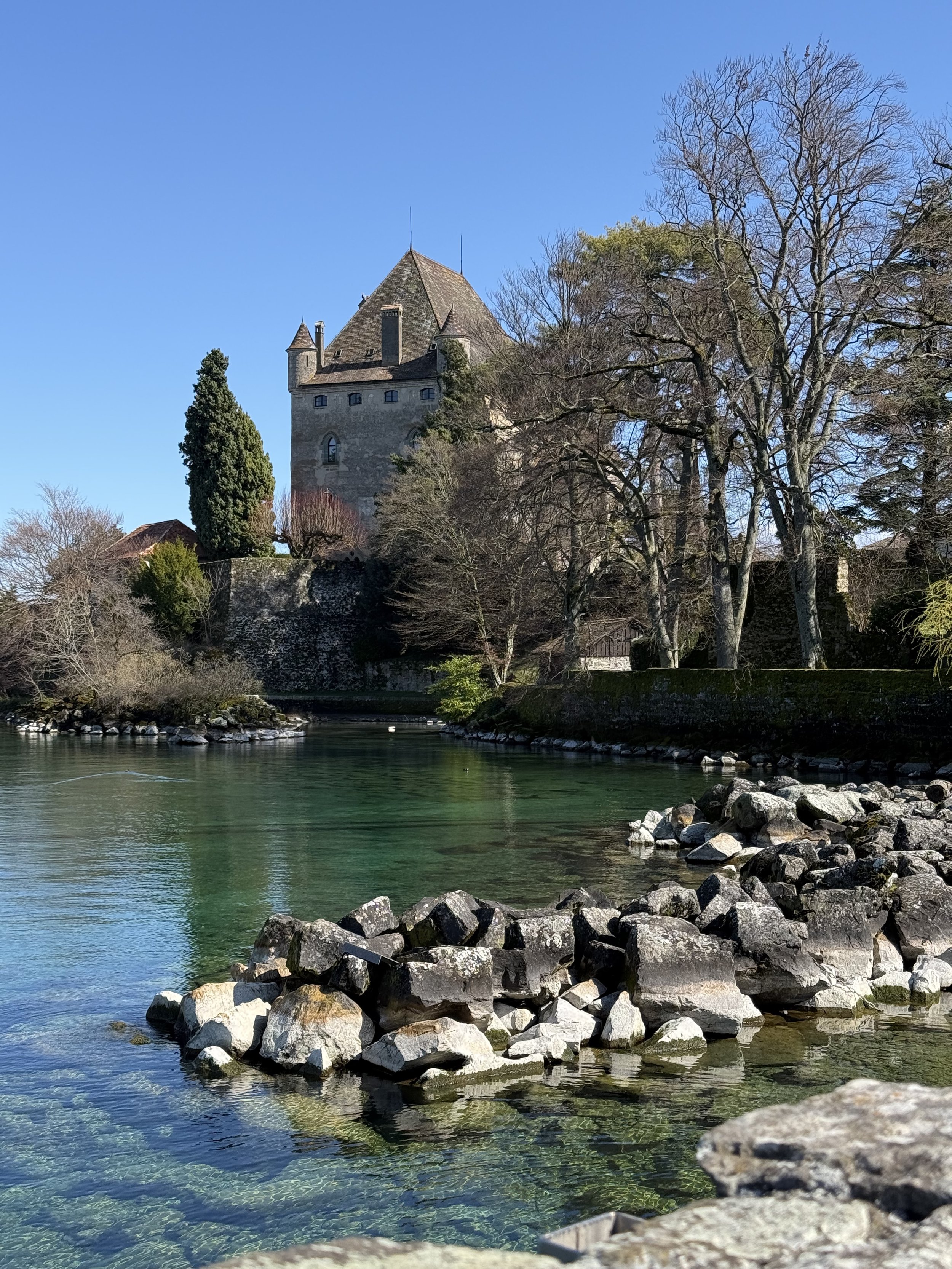
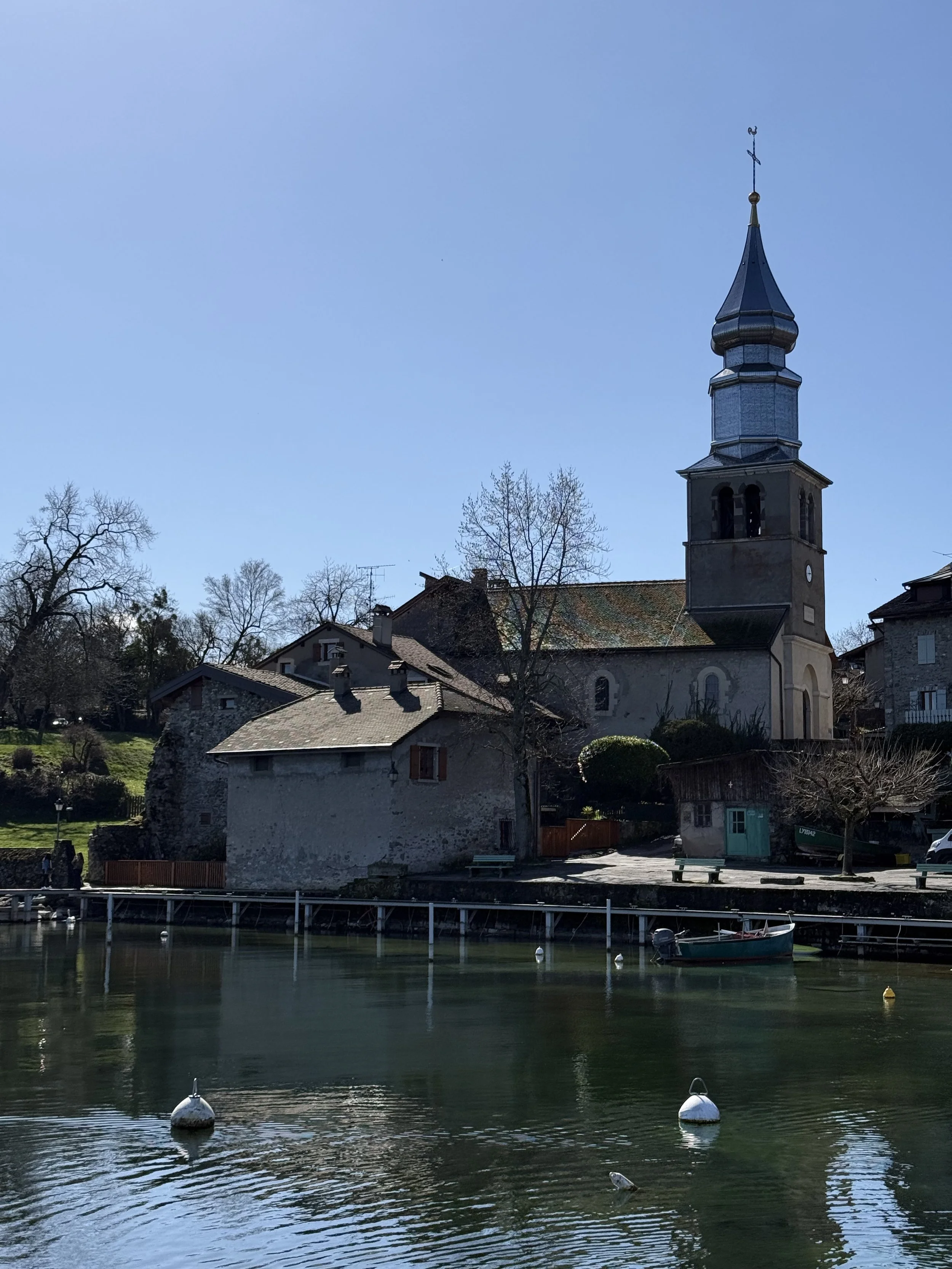
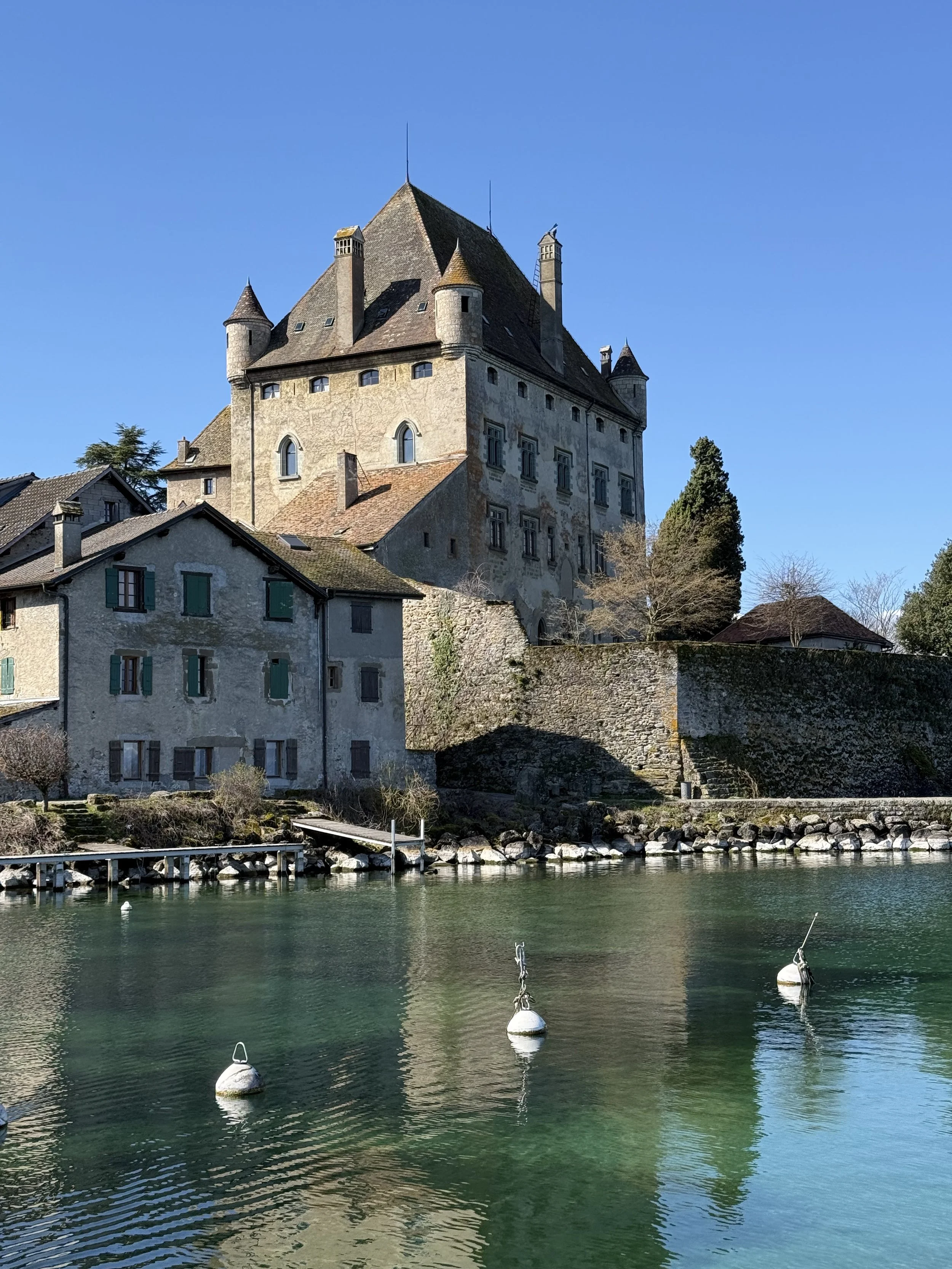
Yvoire was founded in 1306 by Amadeus V, Count of Savoy as a strategic military location and later became a fishing village. Today it is popular with tourists, particularly in the summer months, but out of season it is a wonderful place of beauty and peace. The castle was built around 1324, and the onion-shaped domed church of Saint-Pancrace, which sits in a square known as the Place du Thay, dates to the 11th century.
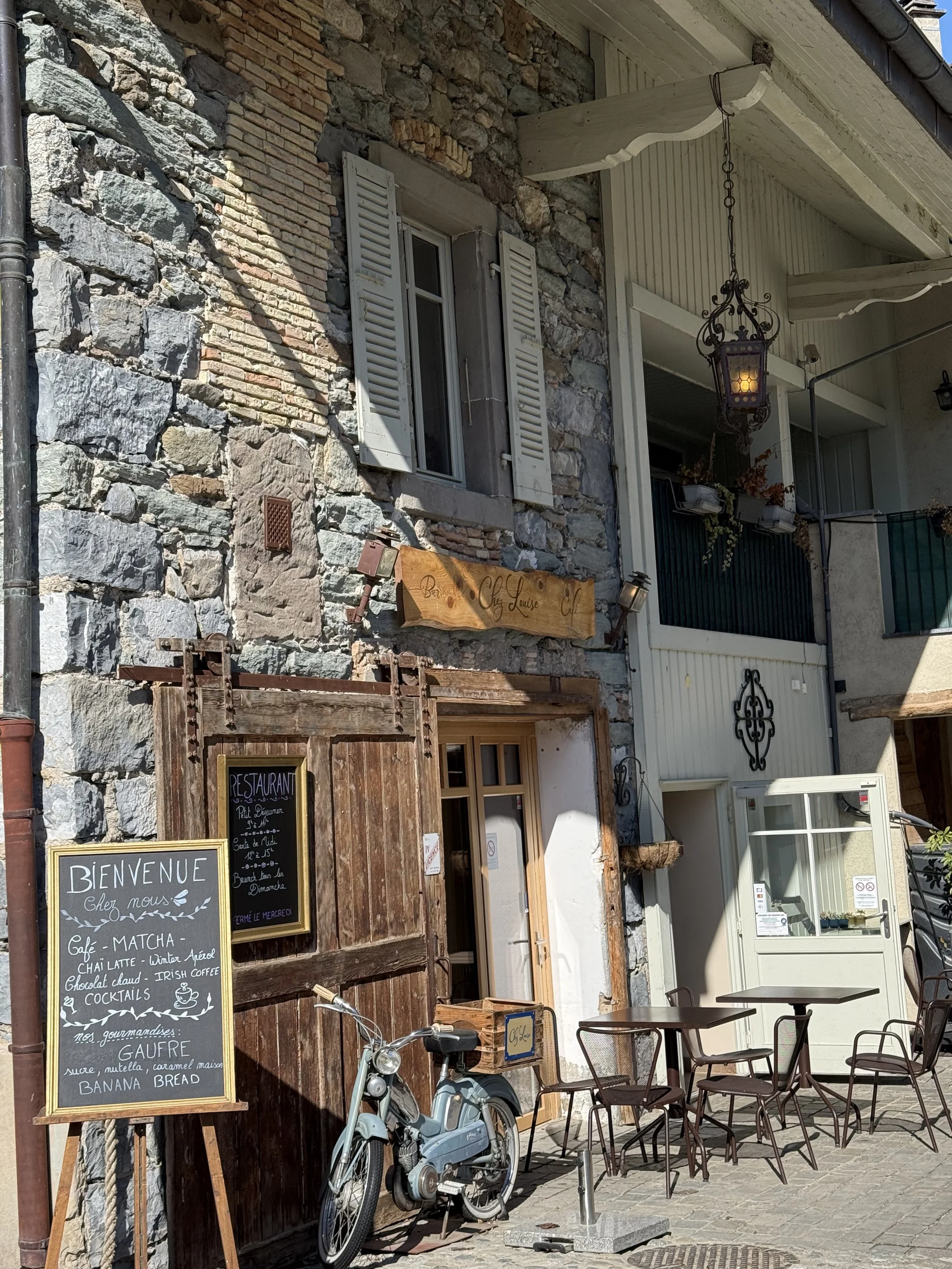
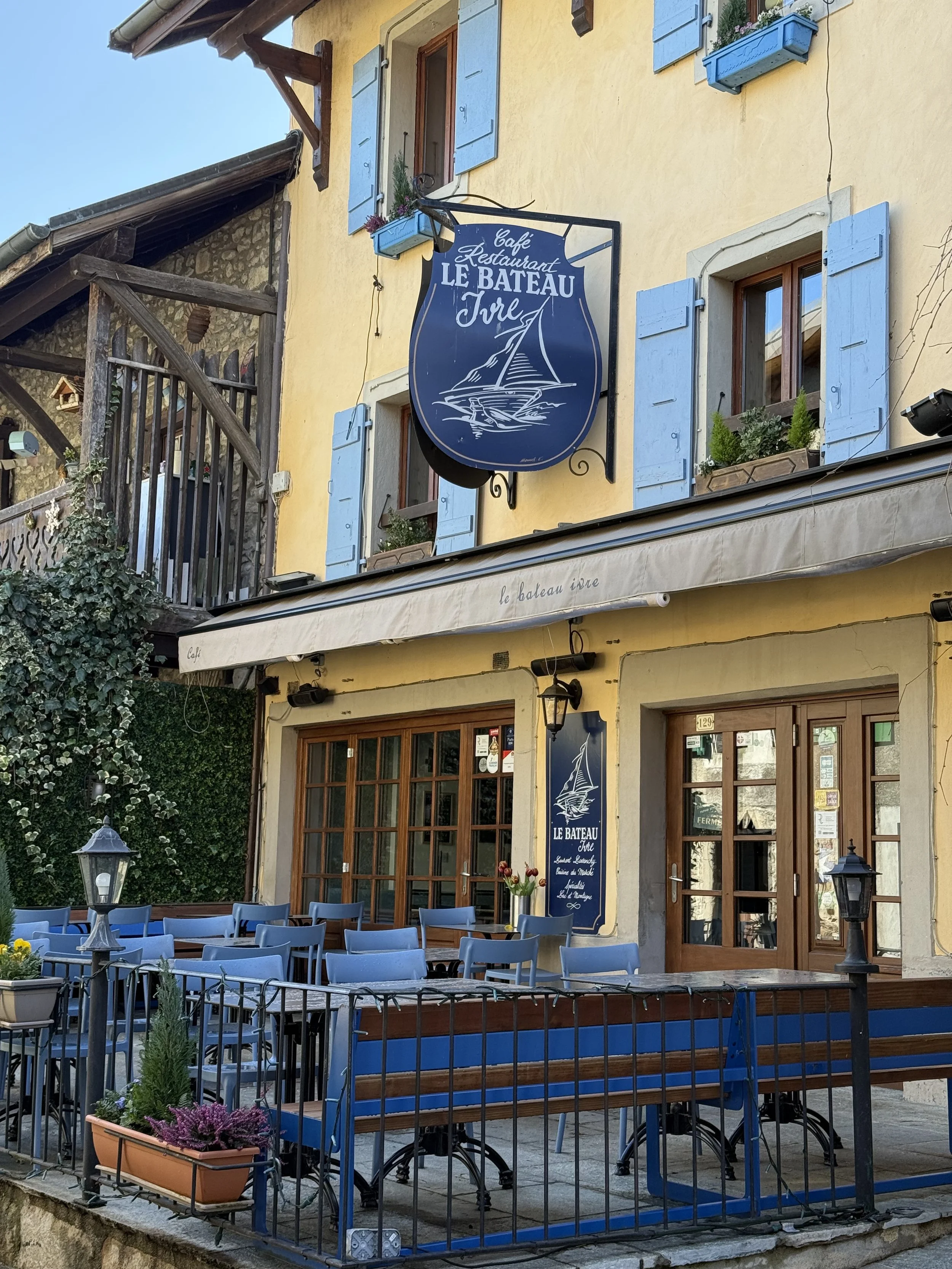
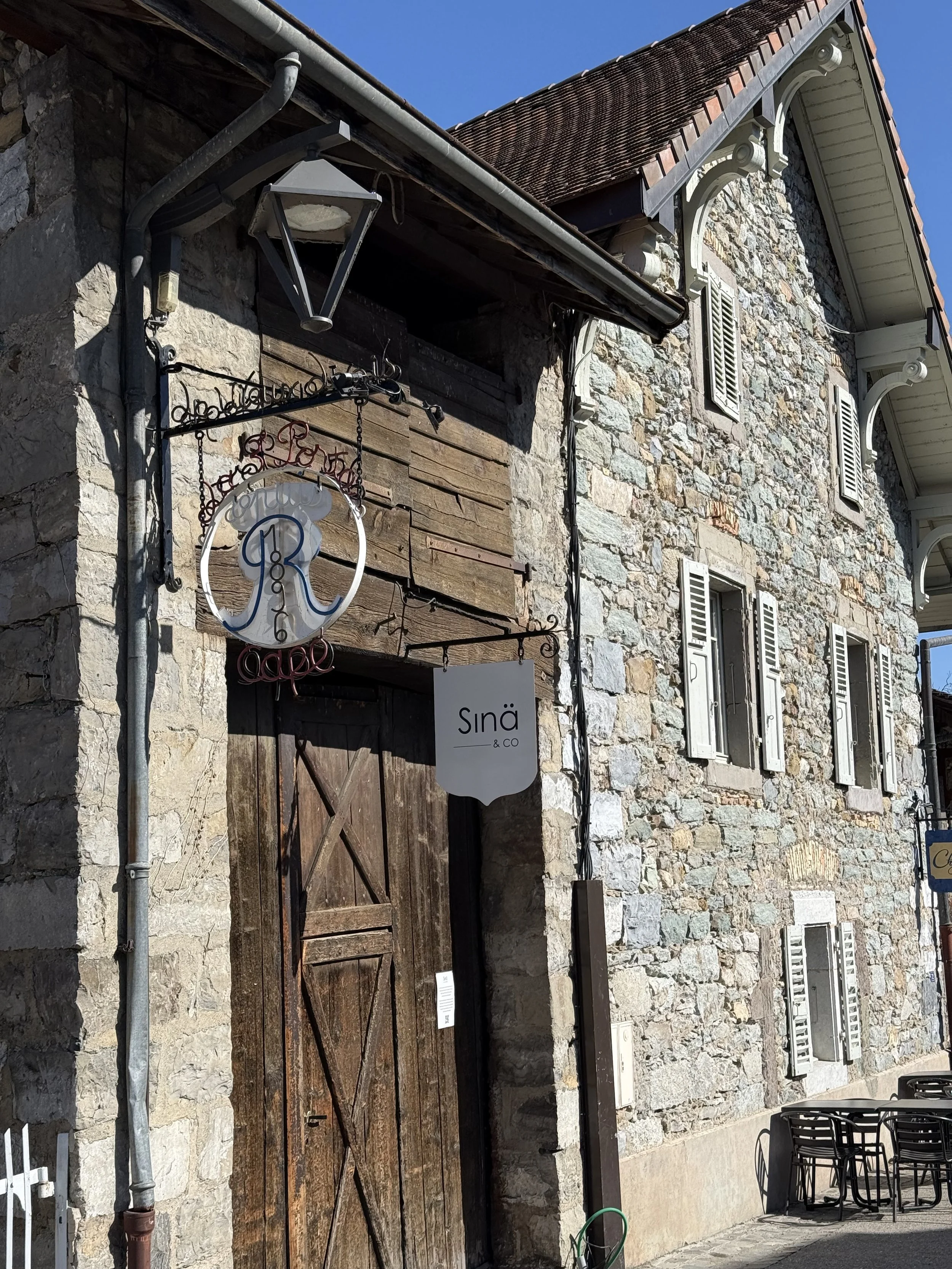
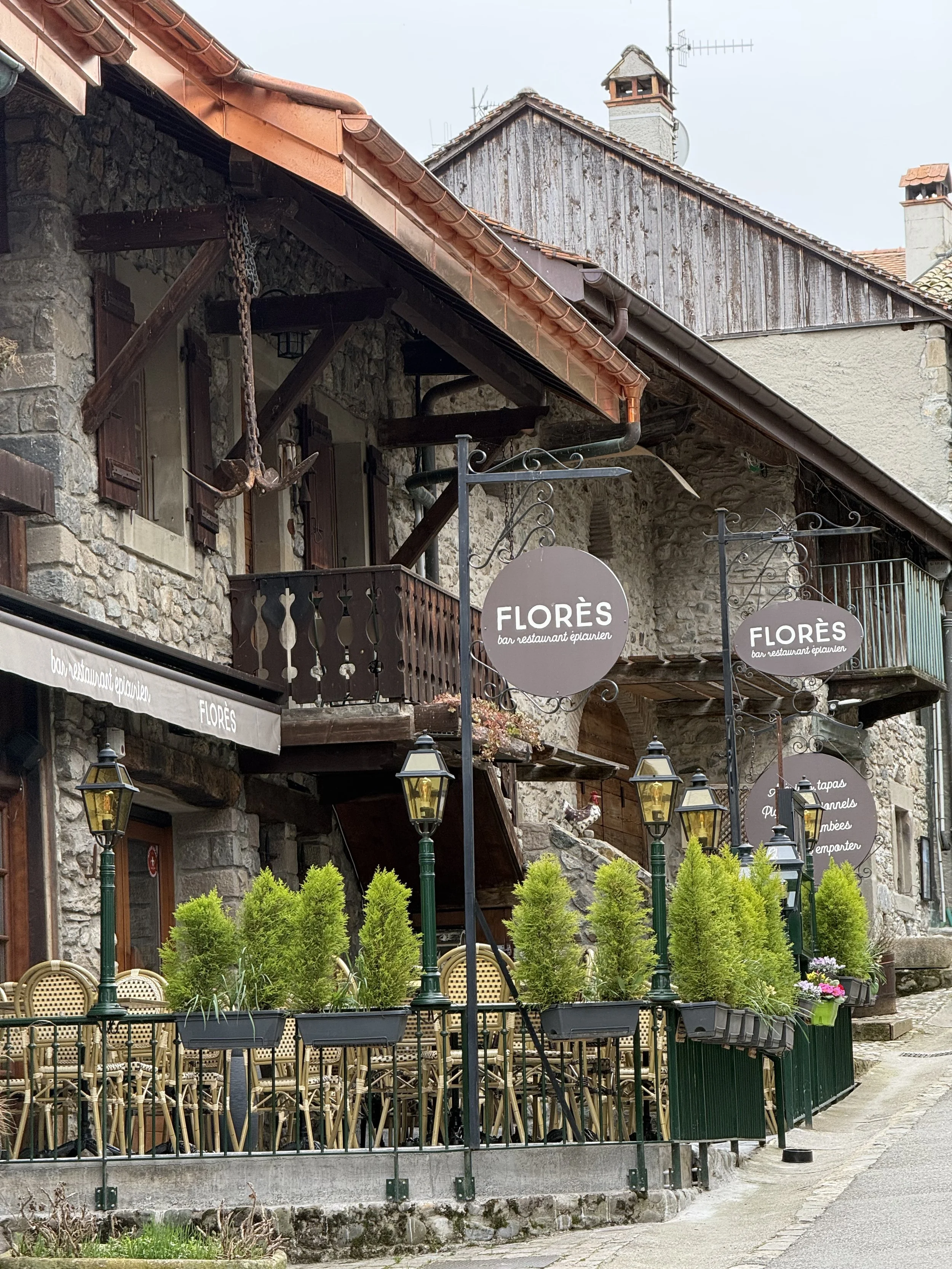
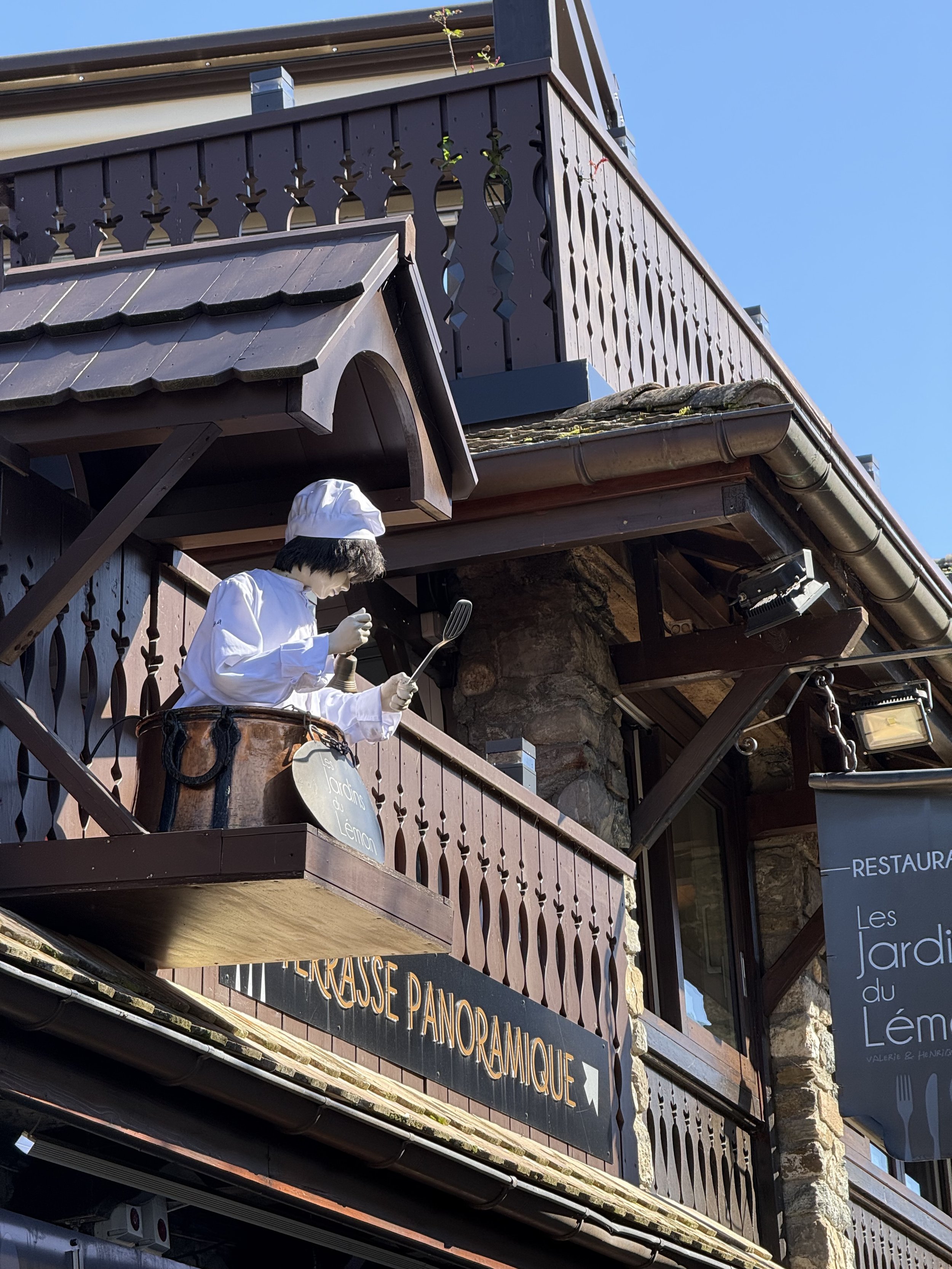
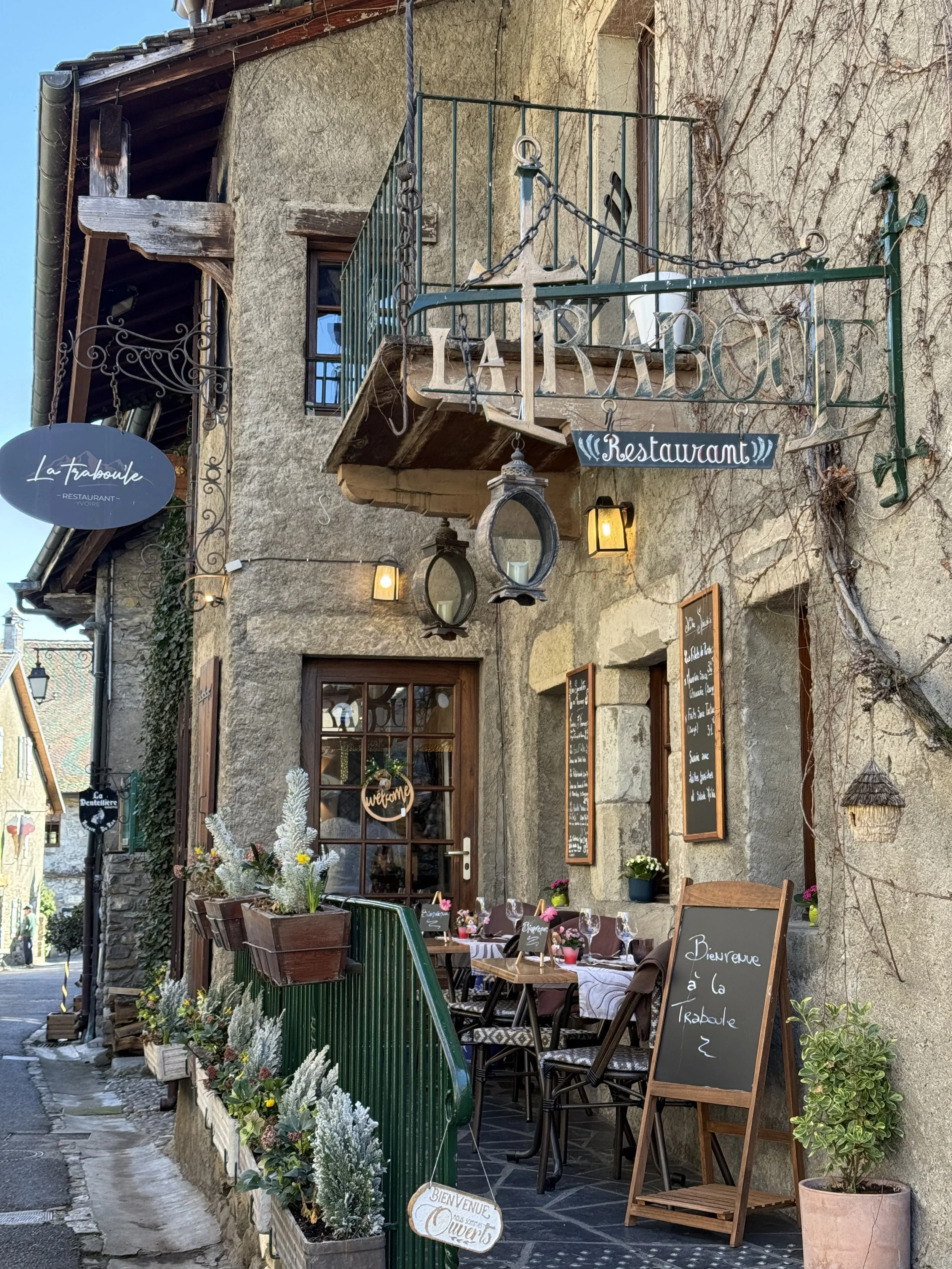
As you wander along the Grande Rue and onto Rue Paul Jacquier, you pass a choice of restaurants. I had a lovely Savoyard lunch at La Traboule, I would urge you to try the local perch fillets. As you continue, you will find art galleries and small artisan shops, before making your way to the main stone arched gateway, known as the Porte de Rovorée. Venture through these gates and you find yourself at the Place de la Mairie and town hall.
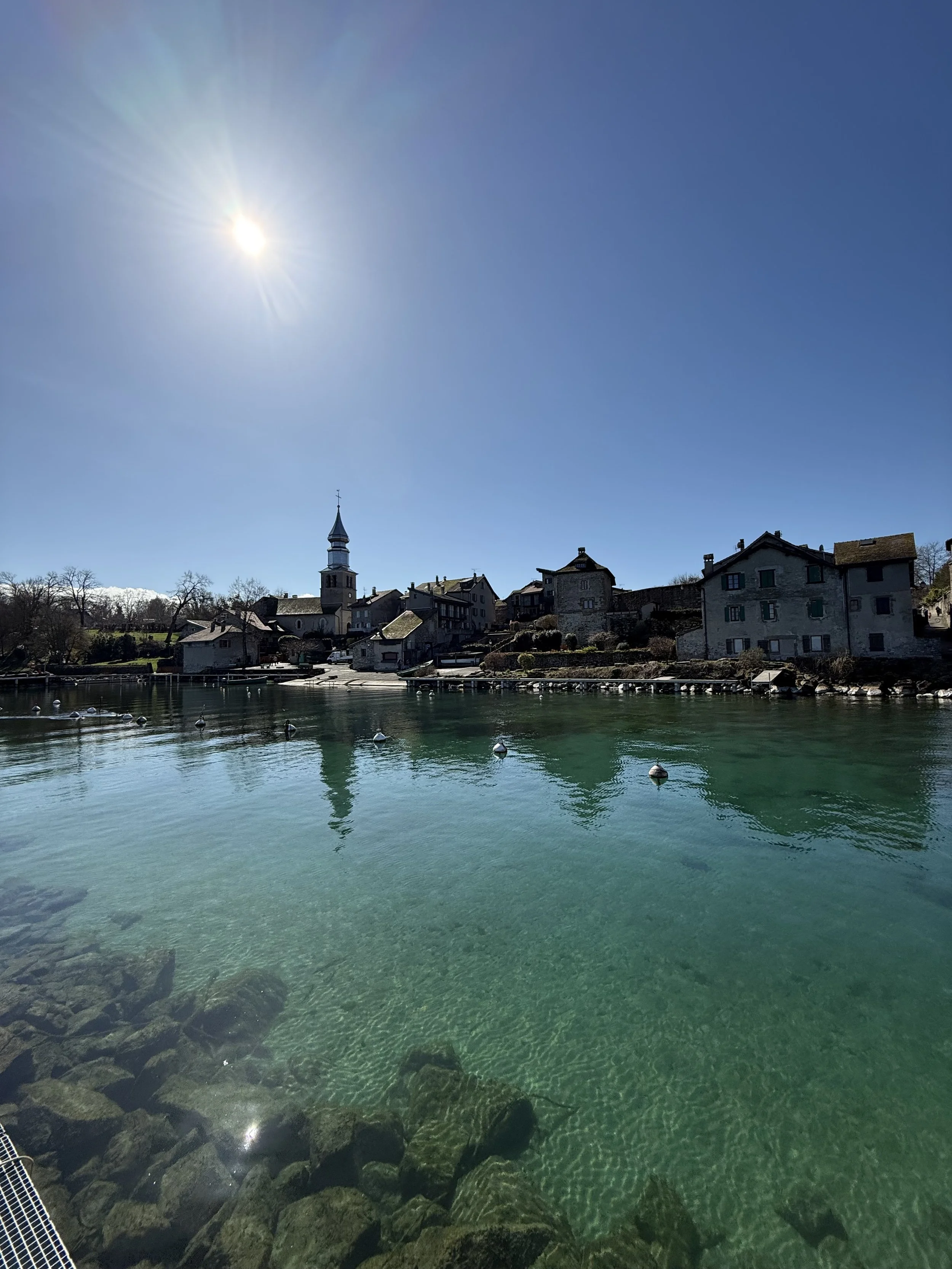
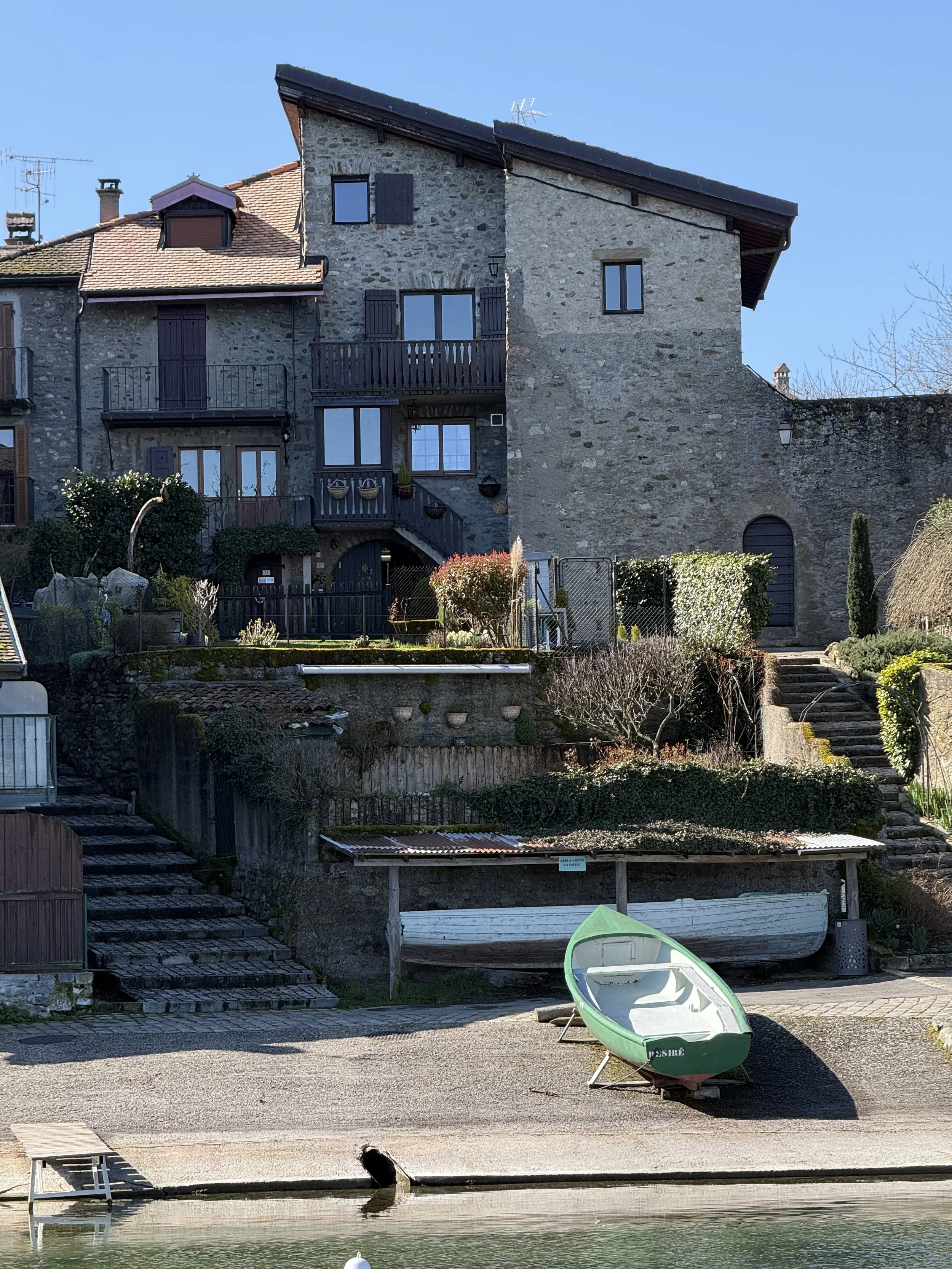
Heading back towards the waterfront, you pass via the Place du Thay to the second, smaller marina, Port des Pêcheurs. Here you will not only still find fishermen’s boats on the shore, but also stunning views of the castle, Lake Geneva, and the snow-capped mountains beyond, as well as views across the lake towards Switzerland on the opposite side.
A number of the restaurants and shops do not open until April, including the Garden of Five Senses near the castle, but there is still plenty to enjoy. Simply walking the streets and taking in the views, without the crowds, is enough.
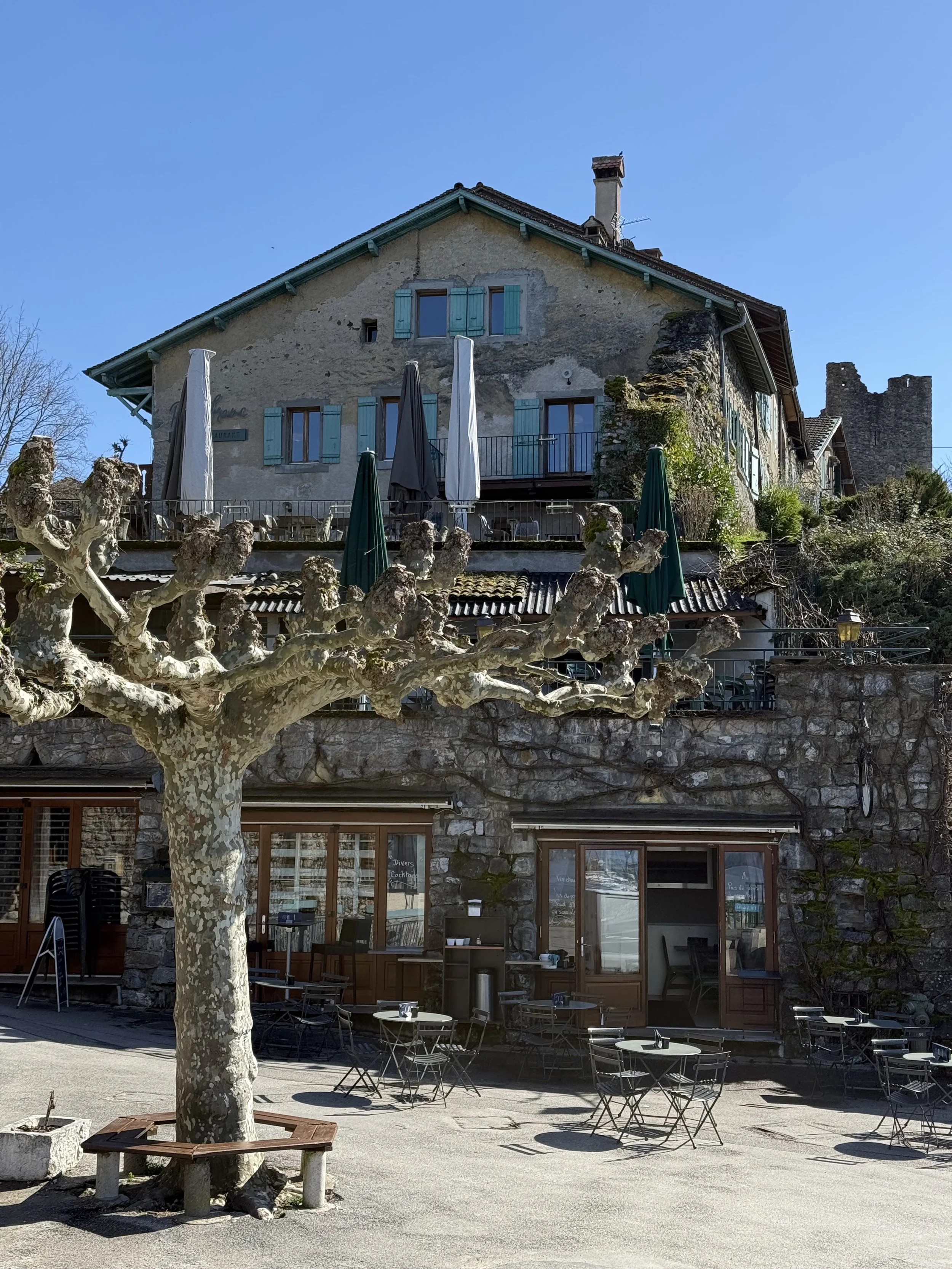
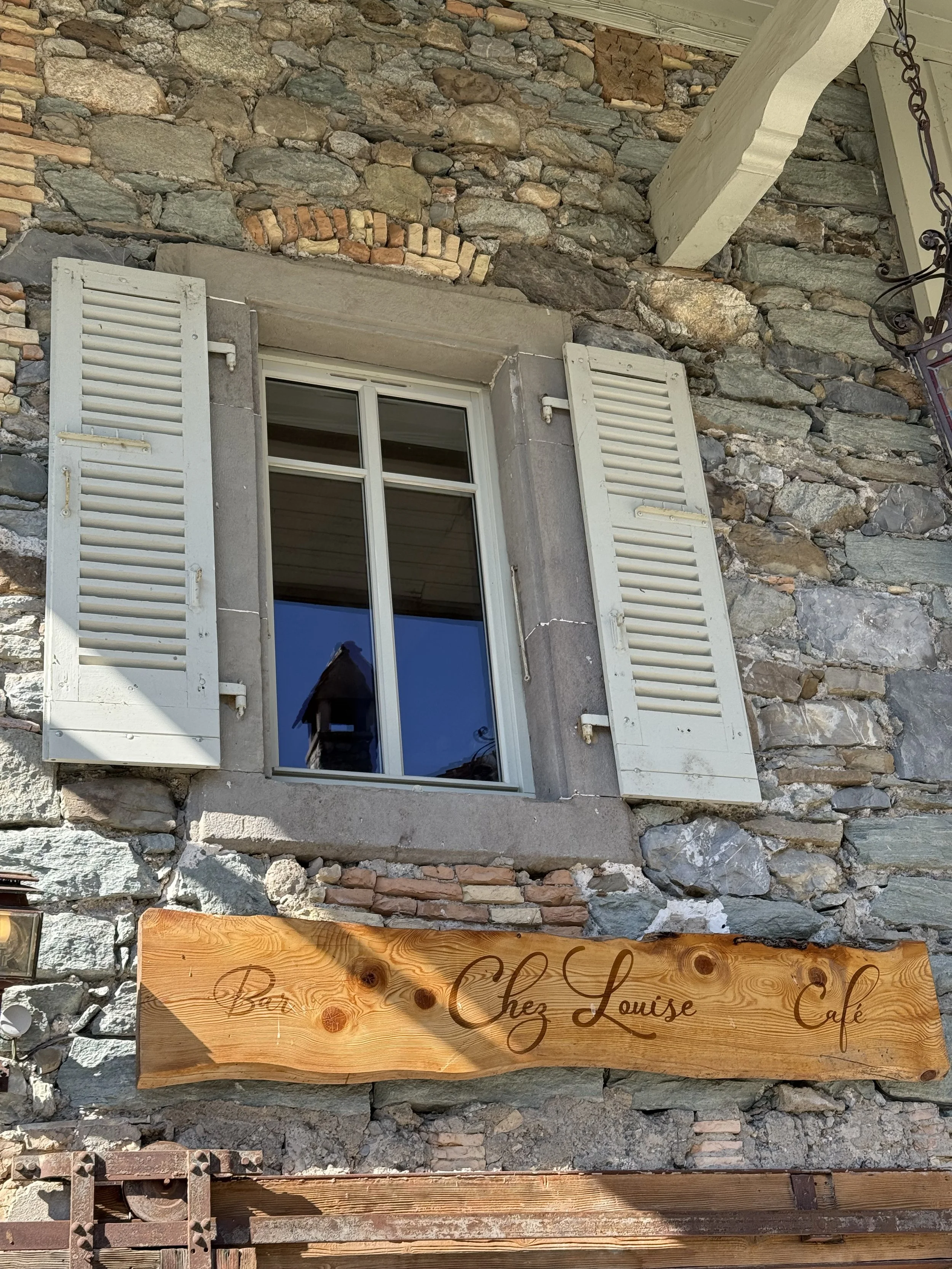
Walking away from the main town towards the marina, I found a café to sit and just be. On this occasion I was here on my own, as I had been visiting my daughter who lives in Geneva, but had taken a few days to explore on my own whilst she was working. There is something quite calming about spending time alone in a beautiful location, with few people around to spoil that peace. To just sit and listen to the sound of the waves lapping at the boats and the masts clinking in the breeze, it feels quite meditative. I felt clearer of mind, not as foggy-headed as normal, more rested and without the noise of everyday life.
I appreciate this can be found in so many beautiful places near where we all live, it’s just giving ourselves the time and permission to not only find the space, but to really sit in it and allow it to work its magic.
As my two days exploring this beautiful village came to a close, I was looking forward to meeting my daughter for lunch and then heading back, feeling revitalised by my time in Yvoire.
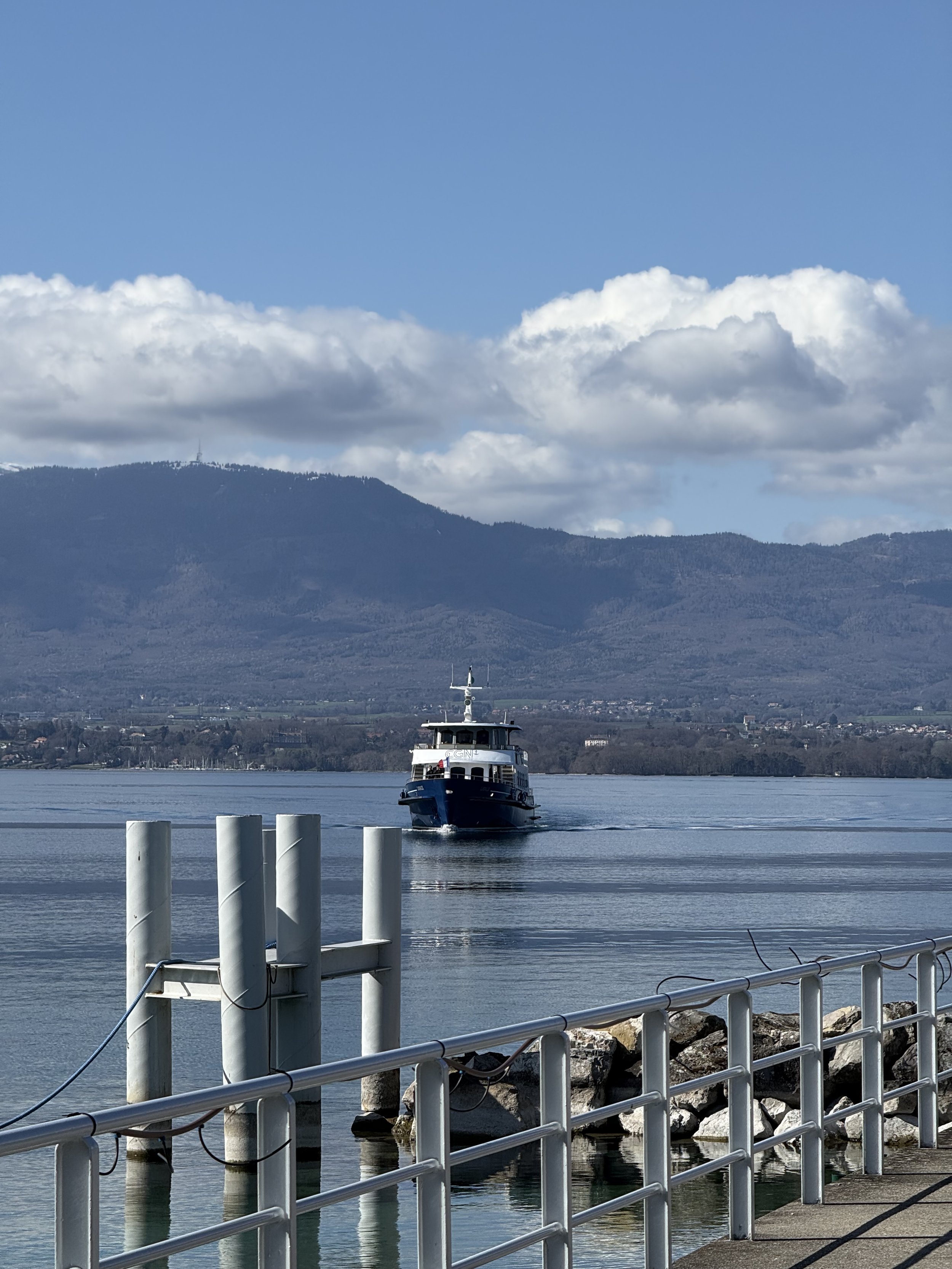
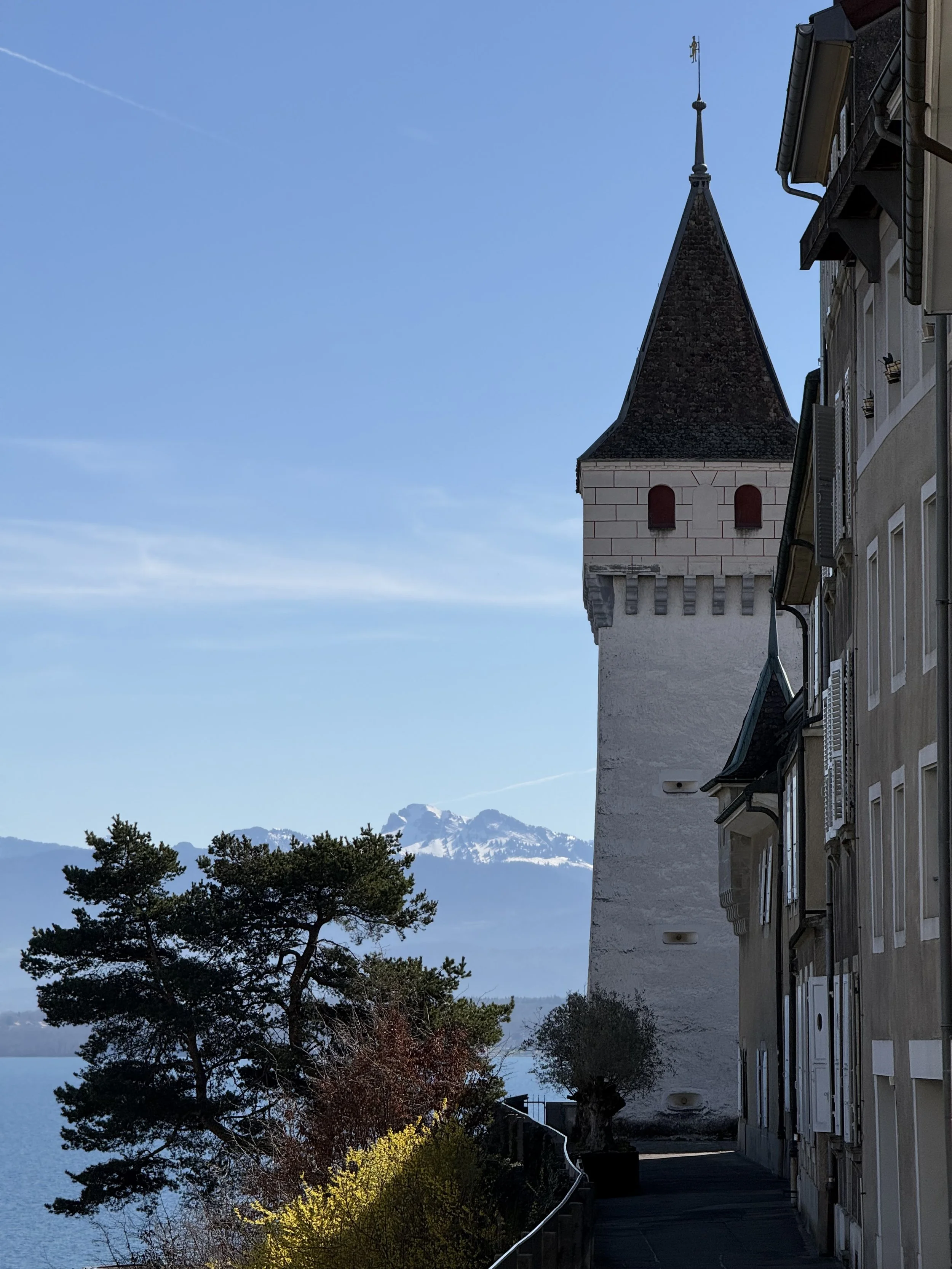
My route back to Geneva was via the 20-minute ferry ride to Nyon, with views of the jet d’eau in the distance, followed by a 15-minute train journey directly to Geneva. Before jumping on the train, I spent a couple of hours exploring the delightful town of Nyon, with its stunning 12th-century fairytale castle, Château de Nyon, perched high on the hill with incredible views of the lake. With lovely cafés, shops, museums, and galleries, together with its lakeside promenade, Nyon is definitely worth allowing time for.
I have no doubt that Yvoire, and indeed Nyon, would be wonderful to see in the summer months, particularly when all the flowers are in full bloom, but there is most definitely a unique beauty, and indeed a privilege, to visiting in the quieter months, when you not only have the time and space to explore at your own pace, but can feel such a sense of peace and calm. It is pure joy.
My husband and I plan to visit together later in the year. I know Yvoire will still be captivating and beautiful, but it will have a new life and energy of its own, which will also be lovely to experience but I do feel very lucky to have had the chance to explore it on my own, before it fully awakens for the summer.
We invite you to join our community and sign up to our monthly newsletter, sent to you on the 8th of each month with new experiences and places to discover.
