
Christchurch, New Zealand – Returning to the Past Whilst Looking to the Future
There are moments in midlife when travel becomes less about ticking off destinations and more about meaning. About memory, identity, and the quiet questions we carry with us as life shifts and evolves. Returning to a place that once shaped you can feel both grounding and unsettling, a reminder of who you were, who you are, and who you might yet become.
This New Year we headed to New Zealand, or Aotearoa as it is also known, to visit our son who is currently living in Queenstown. It was a journey that quietly reminded us how swiftly time passes, and how returning to a place can hold both familiarity and profound change. This wasn’t just a family visit or an excuse to take a holiday to a far-flung country; it was a return to a beginning.
At the age of 29, after completing a ski season in the French Alps, my husband and I headed for New Zealand. We had no commitments, no ties, and were free to roam, explore and see where the journey might take us. We were open to it all and to our destiny. We arrived in Christchurch and, fresh off the plane, were met by a couple named Gordon and Audrey, friends of my aunt who had moved to New Zealand on the £10 Pom scheme years before. Known as the Assisted Passage Migration Scheme, New Zealand offered British citizens the opportunity to migrate for £10, with children travelling free, alongside the promise of work and citizenship. Gordon and Audrey had settled in Christchurch with their young son.
While we found our feet, we were kindly invited to stay with Gord and Aud (as they were fondly known). However, they made us a little too welcome. With their wonderful sense of humour and generous hearts, we got on so well that we ended up staying for nearly three months.
Eventually, we settled into New Zealand life, moving into our own house in an area known as Ilam. Our house led down to the River Avon, ironically our current home in the UK is also next to the River Avon. I secured a good job with New Zealand’s main bank, Trust Bank as it was known then, and my husband worked in finance. We embraced all that Christchurch and the surrounding areas had to offer: the hot springs at nearby Hanmer Springs, the French‑inspired town of Akaroa with its tiny Hector dolphins, and the long expansive beaches of Sumner and New Brighton, perfect on a hot summer’s day.
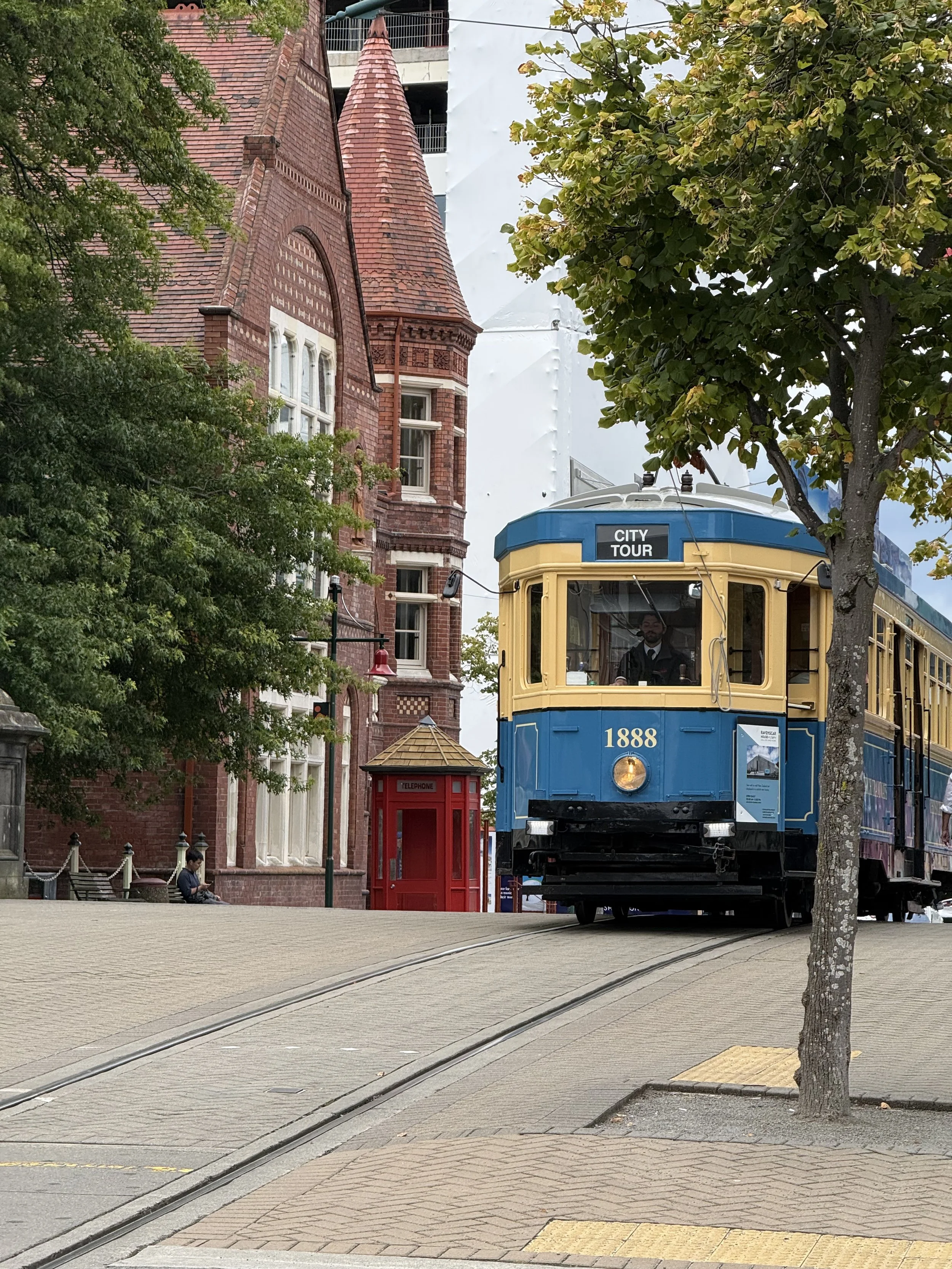
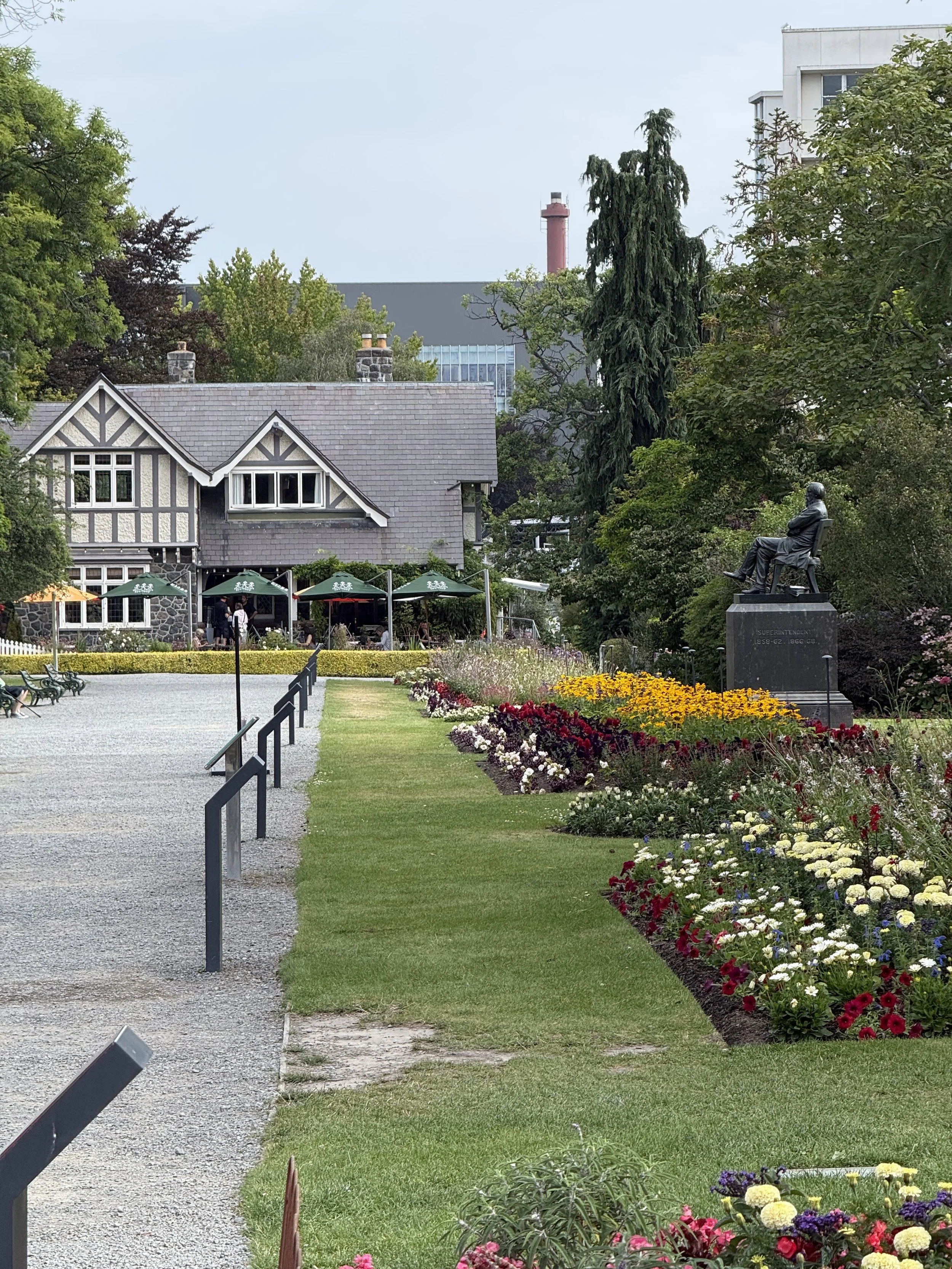
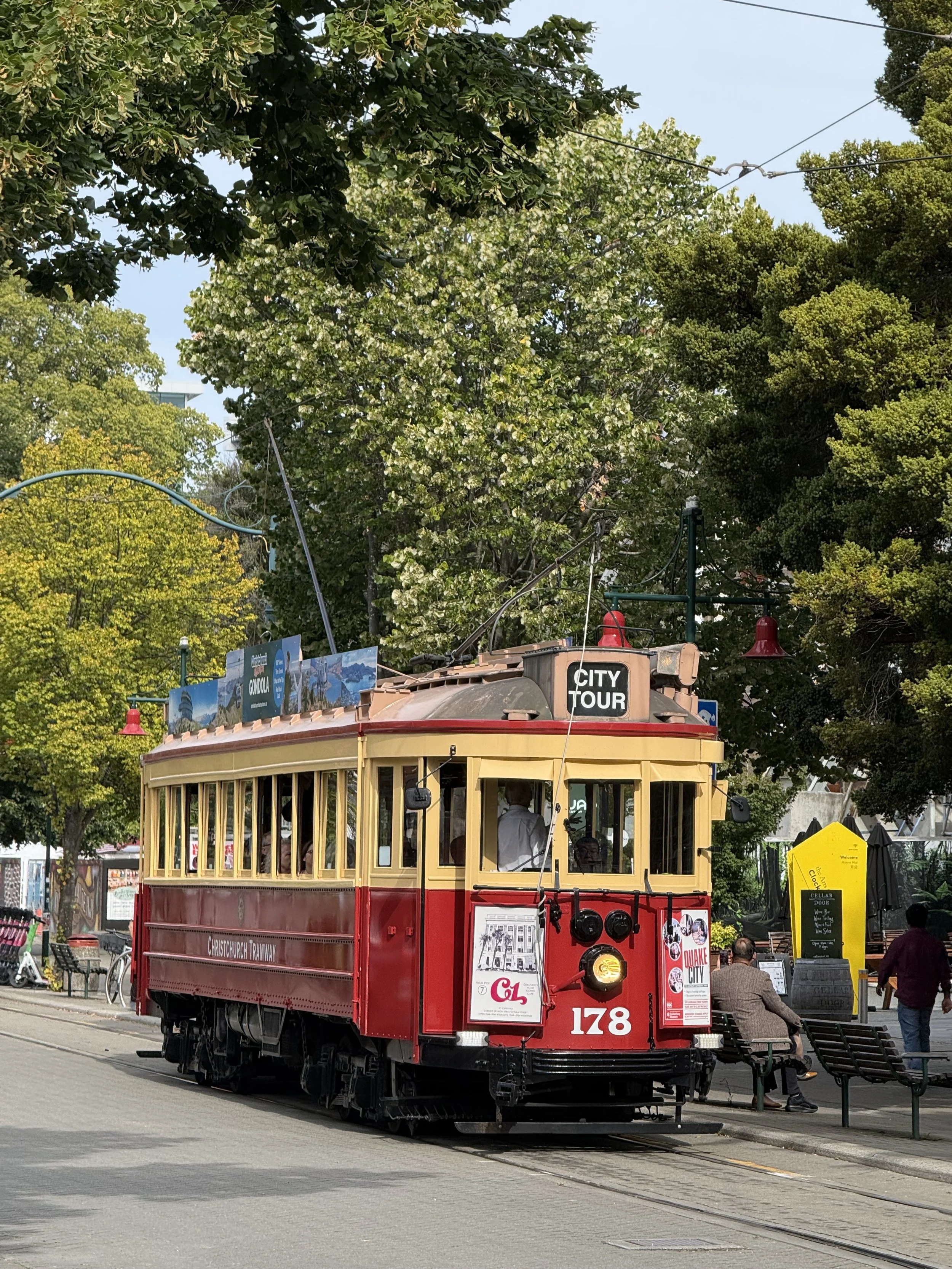
Christchurch, or Ōtautahi, is often called the Garden City and is known for its English heritage. There is punting on the river, reminiscent of Oxford and Cambridge, and expanses of greenery including Hagley Park and the Botanic Gardens. The central city follows a grid system, with road names such as Manchester Street, Gloucester Street and Worcester Street. Many of the red‑brick buildings echoed streets back in the UK.
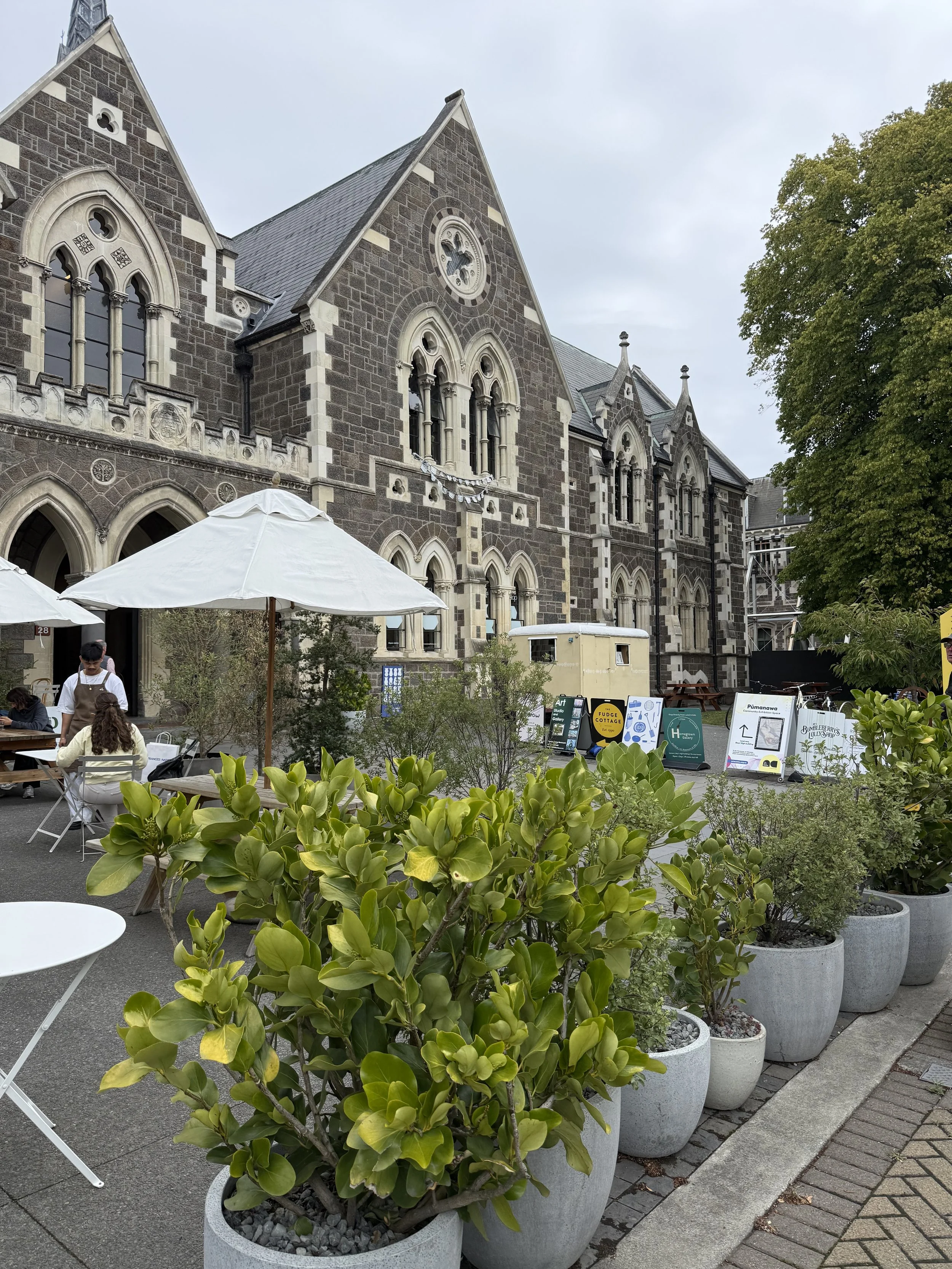
During our time in Christchurch, we had fond memories of the Arts Centre, a collection of beautiful stone buildings dating back to 1877, once Christchurch Boys’ School and later part of the university. When we were there it was a central arts hub and home to Christchurch’s Court Theatre, which we often visited. Christchurch was a blend of colonial and heritage architecture, with the Arts Centre and the stunning cathedral sitting proudly in the main square.
After many happy months, we left Christchurch in 1996 to return to the UK, as I was expecting our son. However, we always vowed that we would return to this beautiful city very soon!
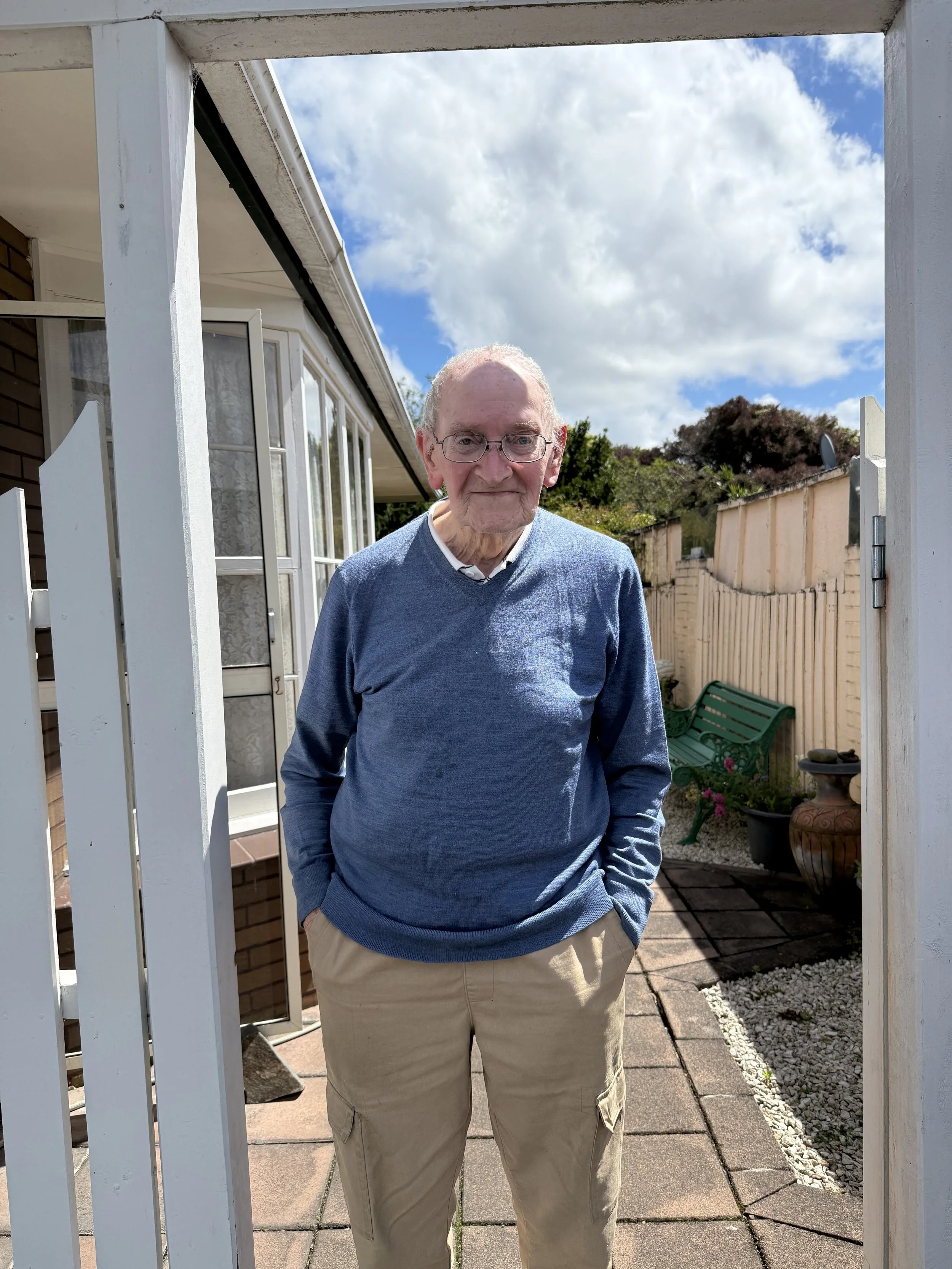
When our son arrived in Christchurch in 2025, also aged 29, he too was welcomed by Gord, now the young age of 91. Sadly, Aud had passed away a few years earlier. Just like his parents before him, our son stayed for three months before moving to Queenstown. During his time there he formed a close bond with Gord and his son, sharing a mutual love of books, film and theatre.
It took us another 29 years to return to New Zealand and to Christchurch. Life, as it so often does, simply got in the way. Every time we planned to go back, it never quite aligned. So, we were excited to be there with our son and to introduce him to the Christchurch we had known and loved.
When we first arrived back in Christchurch, our first port of call was, of course, Gord. Walking down the tree‑lined avenue towards what was once our temporary home felt surreal, treading such familiar ground after all those years. Before we knew it, Gord was standing in the doorway, arms wide open, greeting us as if we had just come home from work. That embrace, with someone who had touched our lives so profoundly, was indescribable. The elation and joy, however, was tinged with the very obvious absence of Aud.
The house hadn’t changed much. Apart from a new kitchen layout and a small extension, it was just as we remembered it. As we sat catching up on thirty years of life, I became acutely aware of our own adult son sitting cross‑legged on the lounge floor, in a house in New Zealand where we had lived before he was born. It felt as though life had fast‑forwarded to this moment and the years in between had almost disappeared. There was deep poignancy, and a sadness at how quickly life moves, and yet it felt as if nothing had changed: the same people, the same memories, the same laughter, the same love and affection.
As we left, we promised to return in the coming days and set off to explore Christchurch.
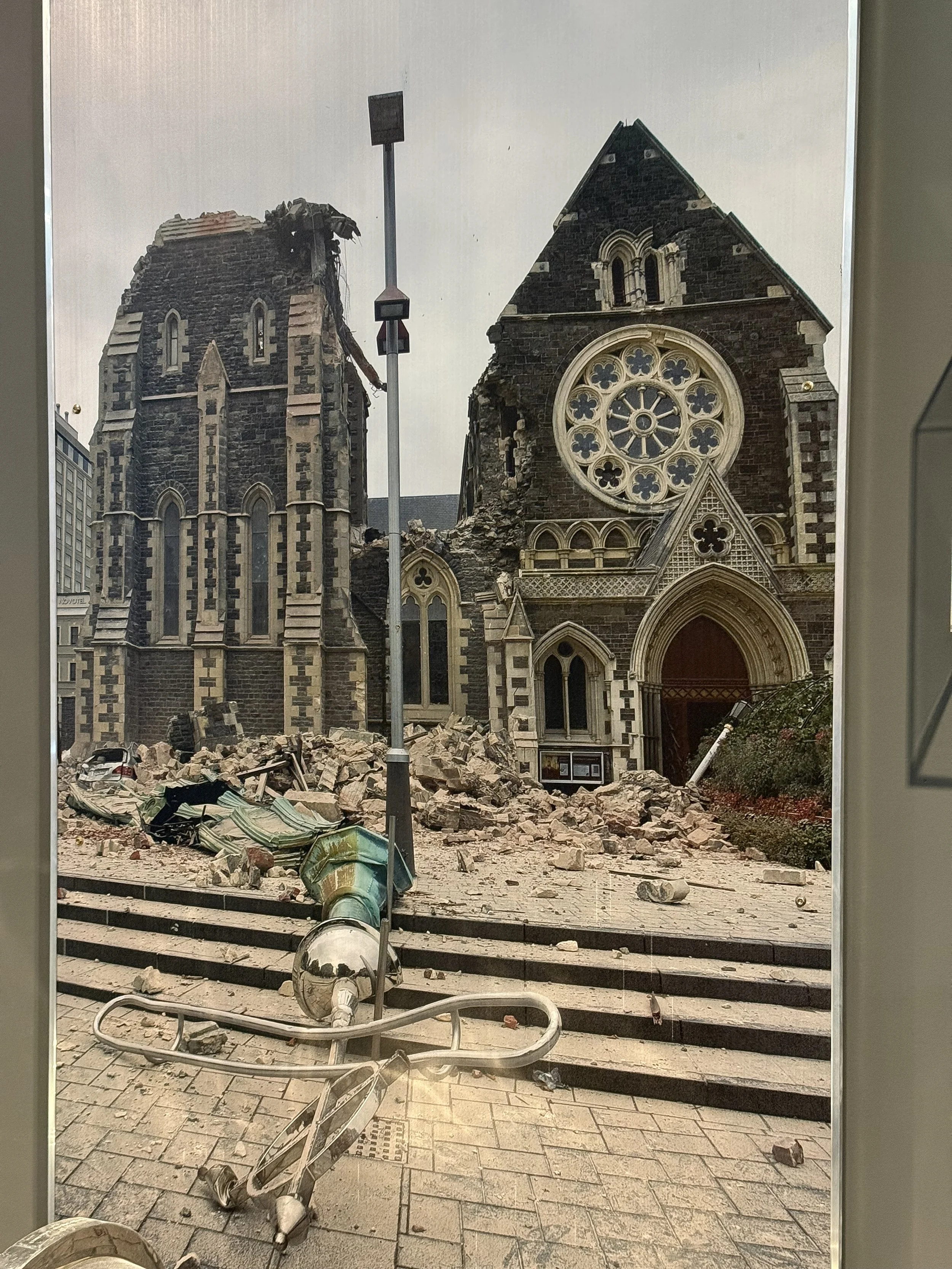
We were, of course, aware of the sequence of earthquakes that had hit the city some fifteen years earlier. On 4 September 2010, a 7.1‑magnitude earthquake struck, causing damage but thankfully no fatalities. Then, on Tuesday 22 February 2011 at 12.51pm, a 6.3‑magnitude earthquake caused devastating damage and claimed 185 lives. What we hadn’t fully prepared ourselves for was just how different the city would look and feel.
A high percentage of buildings in the central business district had been destroyed or damaged, and due to the many aftershocks, access to parts of the city centre was not fully possible for many years.
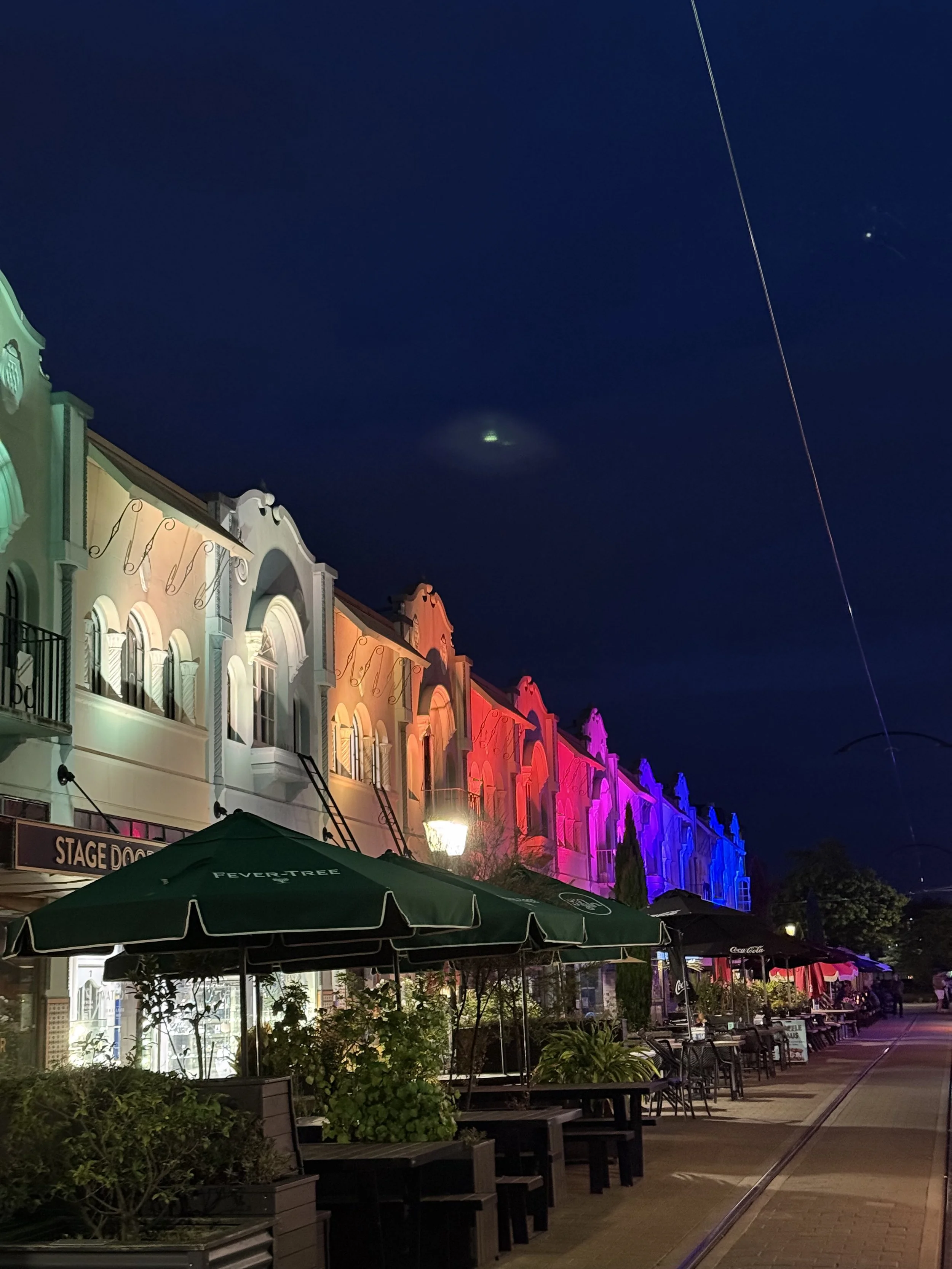
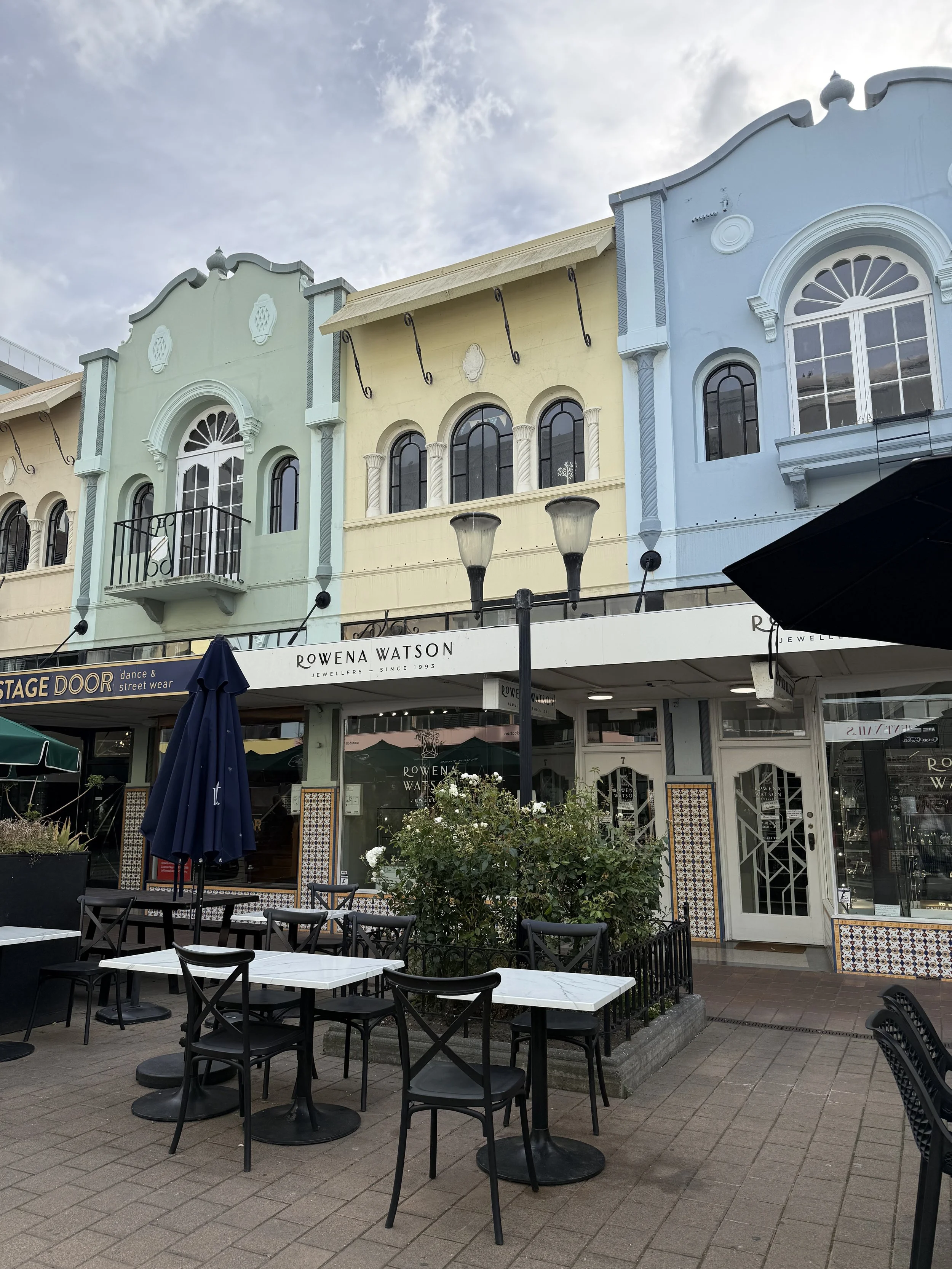
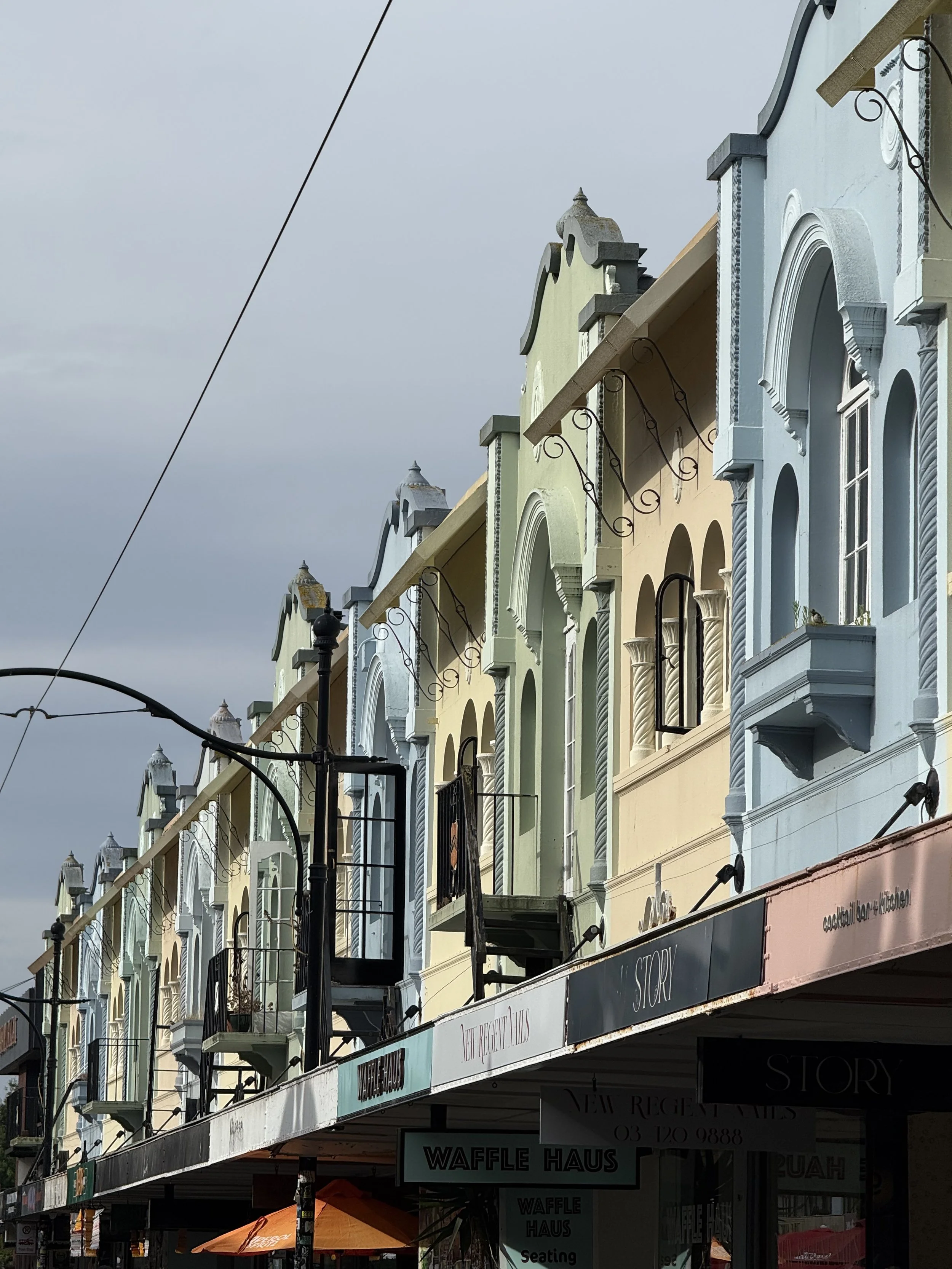
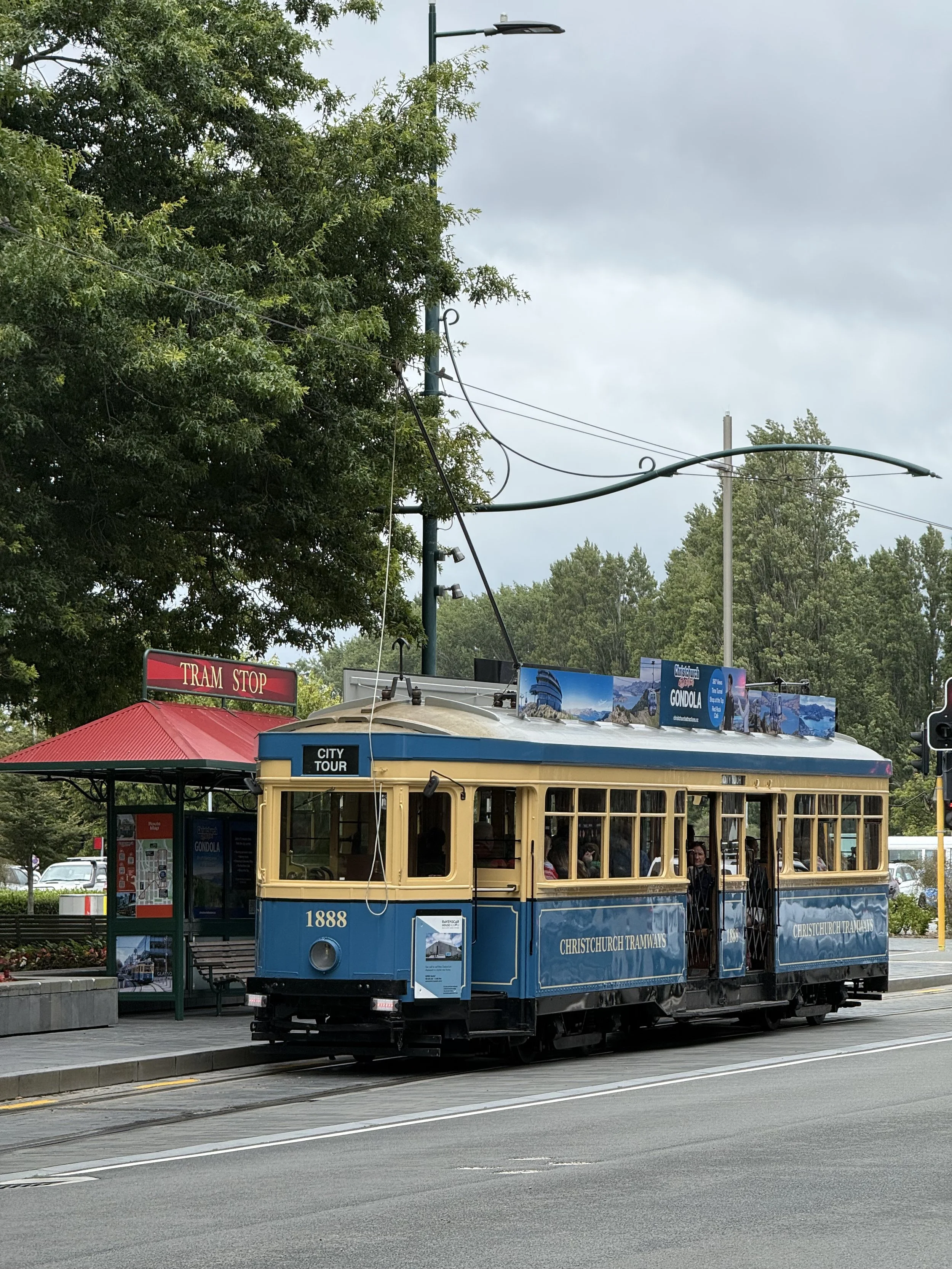
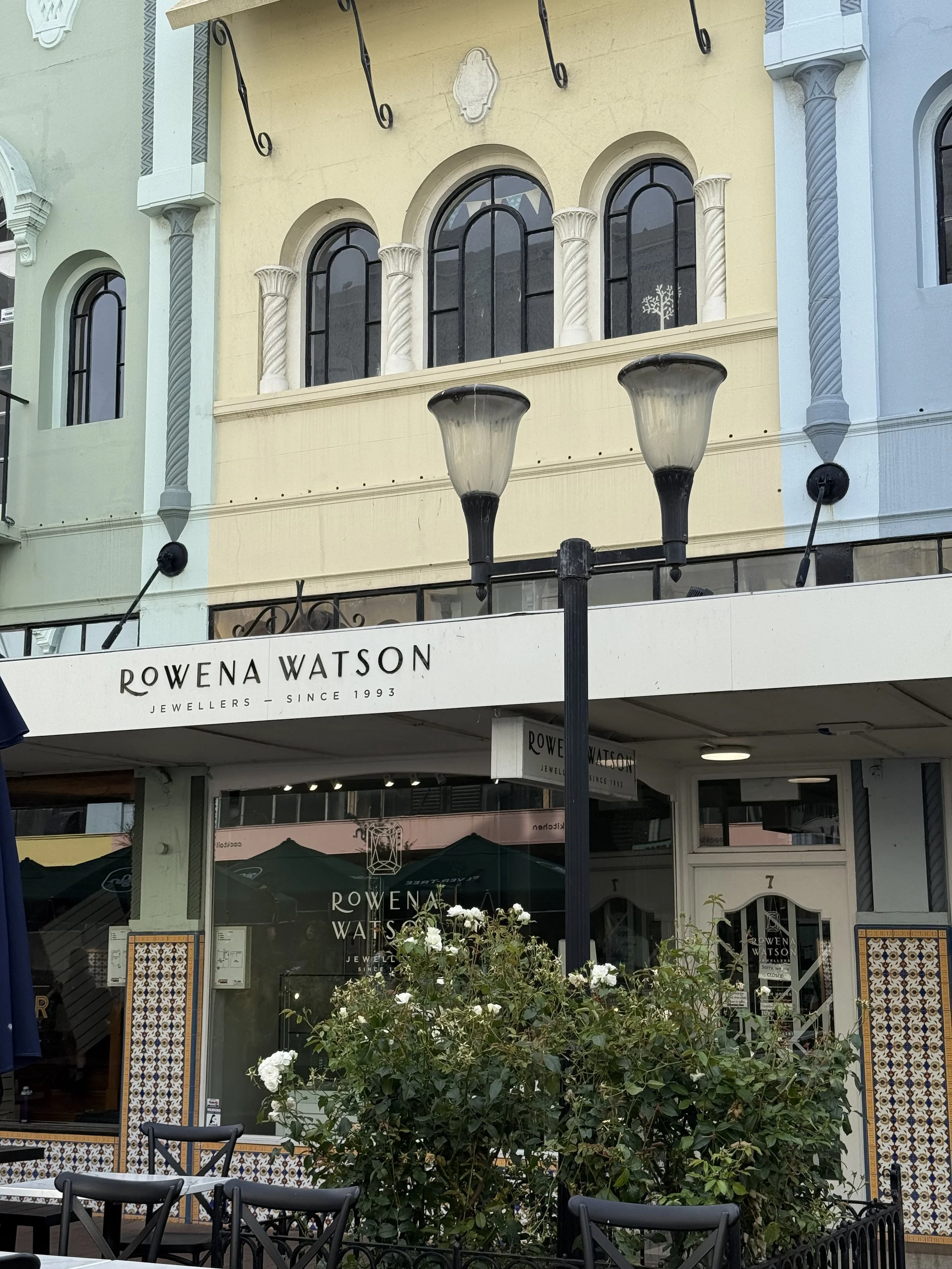
We headed to our hotel, Fable on Gloucester Street, situated opposite the heritage tourist site New Regent Street. Built in the 1930s in Spanish Mission style and decorated in pastel colours, it was pedestrianised in 1994 to accommodate the Christchurch tram, which began operating in February 1995, just before we arrived later that year. New Regent Street remains a beautiful symbol of Christchurch and it was lovely to see it preserved and bustling with shops, eateries and bars. From here, our recollection of the city began to blur.
Gloucester Street meets Manchester Street, and we remembered the dense mix of tall red‑brick offices and shops that once stood there. The street signs were the same, but what greeted us was entirely different.
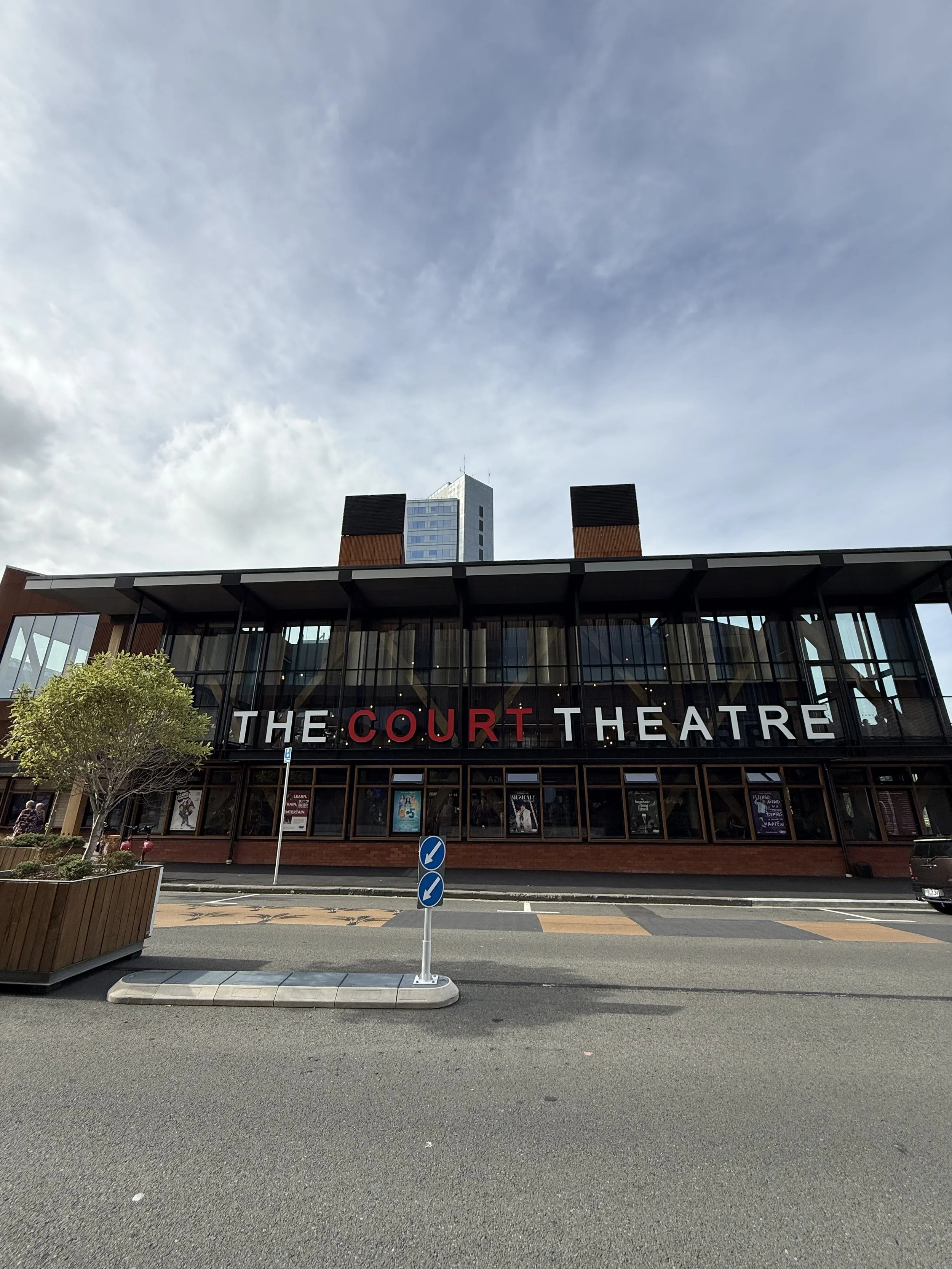
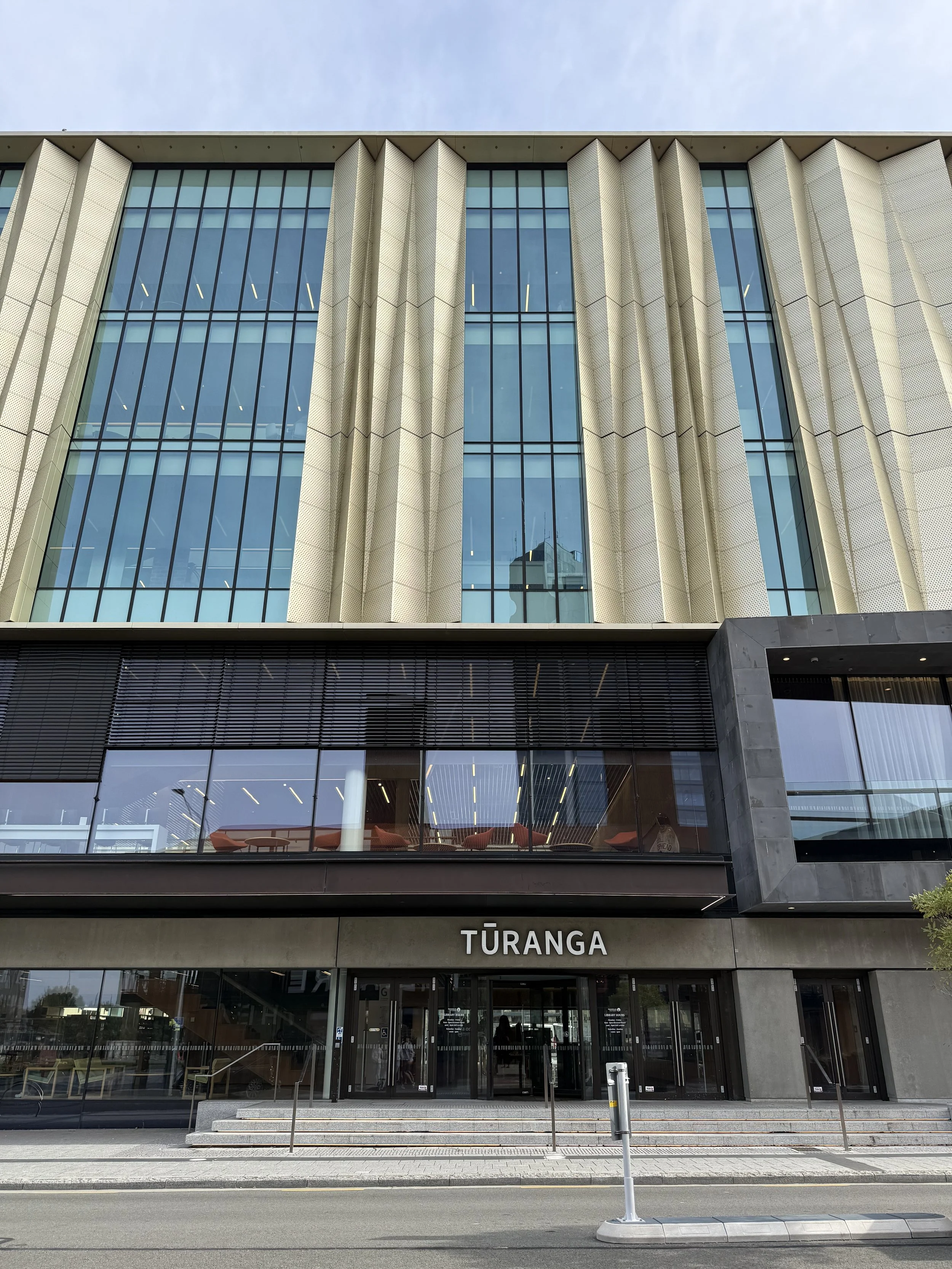
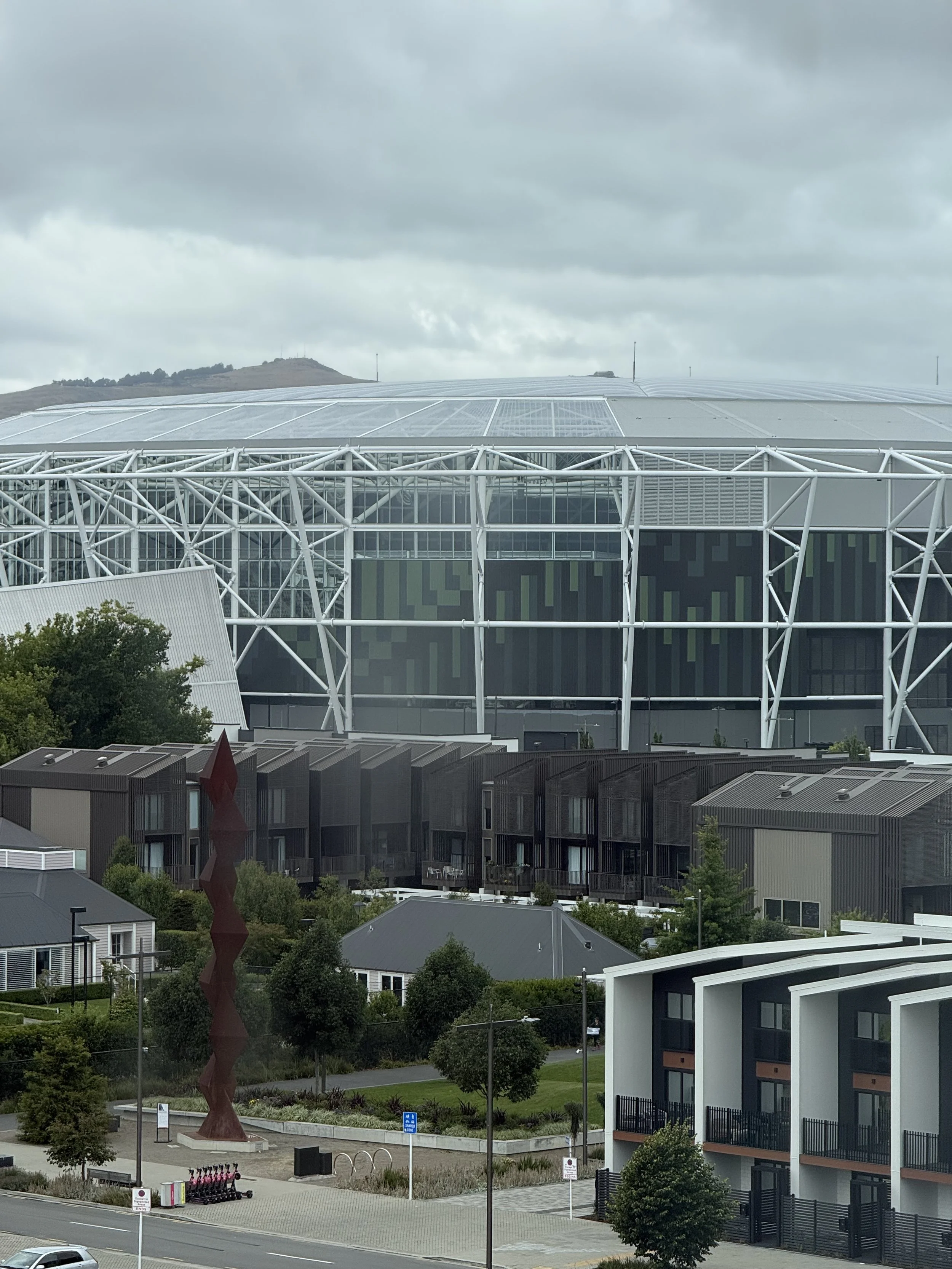
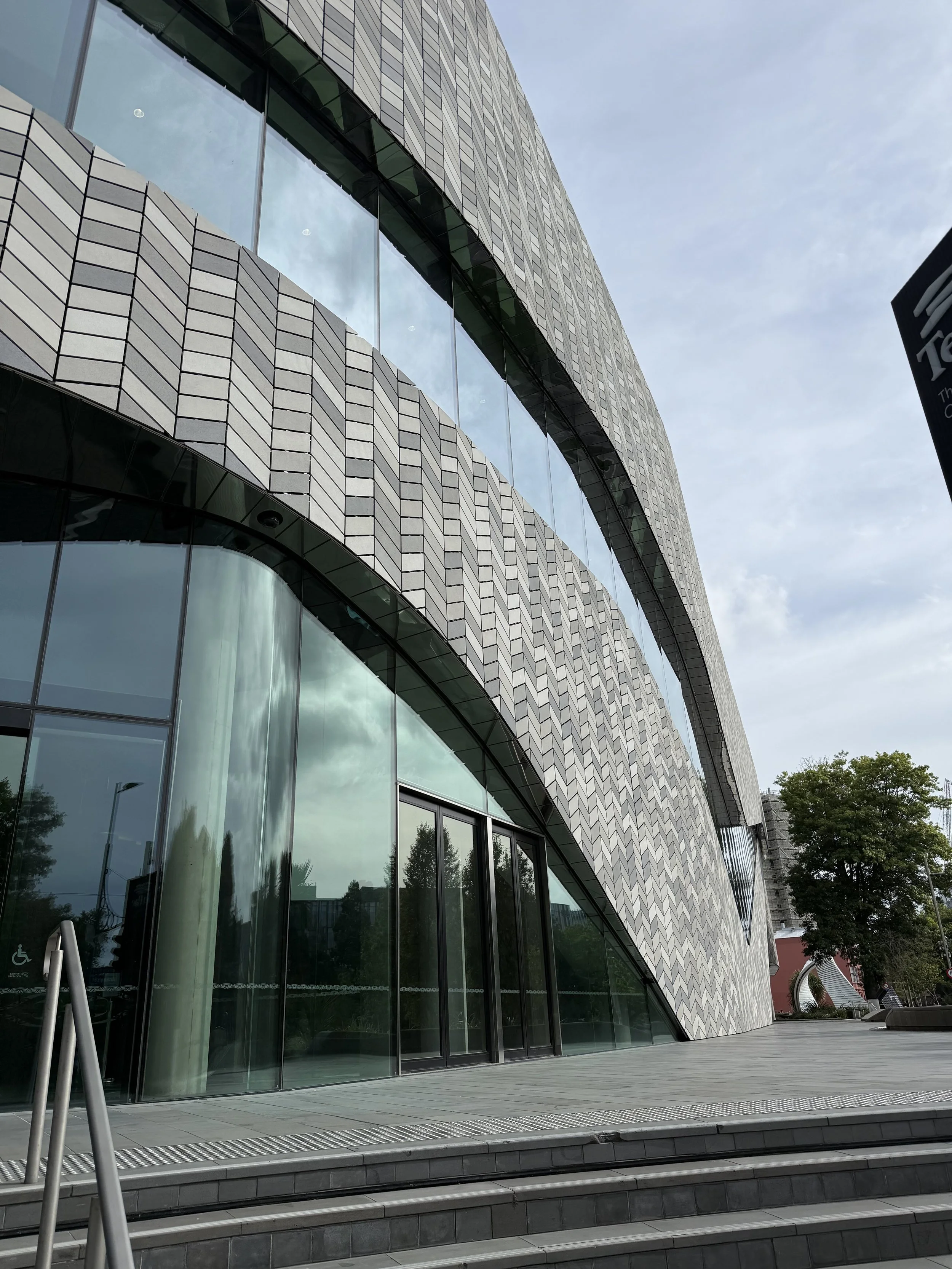
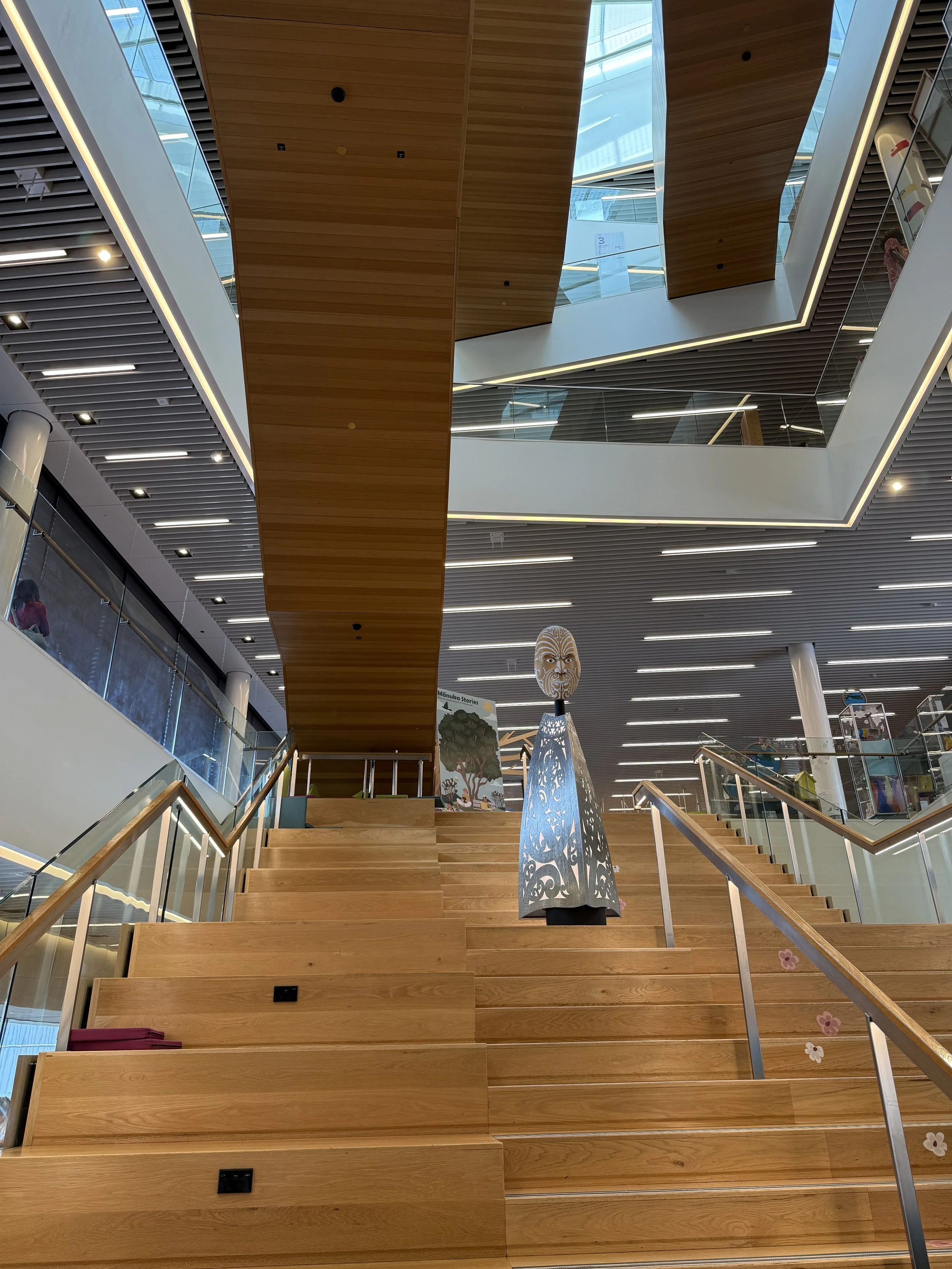
Instead, there were striking open spaces and bold contemporary architecture. The impressive new library/Turanga, with its Harry Potter‑style floating staircases (reportedly requested by Christchurch schoolchildren) sits proudly on one corner. The almost sci‑fi, dragon‑like impressive Convention Centre/Te Pae lies at the end of Gloucester Street and wraps itself around the city. The Court Theatre, once part of the Arts Centre and badly damaged in the earthquakes, had been relocated for several years before being completely reimagined. Reopening in 2025, it now sits proudly on Gloucester Street, in what is known as the Performing Arts Precint. Ironically, Gord’s son was Artistic Director of The Court Theatre for several years and later helped lead the enormous project to bring a world‑class venue back to the heart of the city. At the far end, where Gloucester Street meets Manchester Street, stands the new iconic multi‑purpose stadium on Madras Street – Te Kaha, or One New Zealand Stadium which is due to open in April 2026.
Venturing towards Cathedral Square, we saw the Christchurch Cathedral, extensively damaged when its spire collapsed and the main tower was demolished. Although the building has been made safe, reconstruction is still ongoing. While it is sad to see this beautiful building not yet restored, the surrounding city showcases just how far Christchurch has come. Vibrant street‑food areas line the riverside, with pavement restaurants and a mix of independent and international shops. The city feels alive, forward‑thinking and full of energy. Perhaps the cathedral, as it stands, is a powerful symbol of not forgetting the past while moving positively into the future.
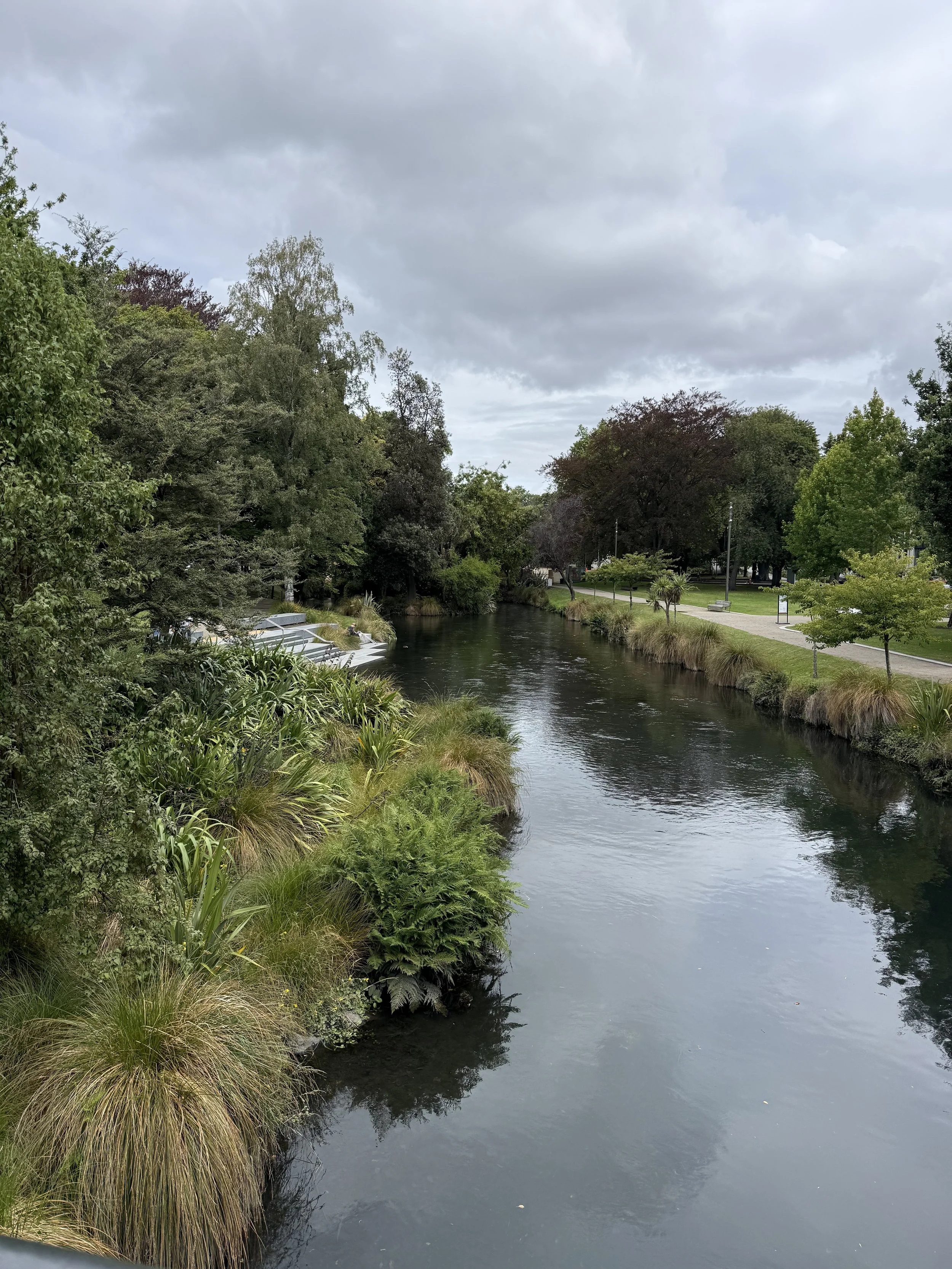
We wandered past the Riverside Market on Oxford Terrace, a lively hub of indoor markets, street food, boutiques, cafés and bars, and continued towards the Avon River. Here we sat on the terraced steps by the water, watching the Longfin eels that can often be seen in the shallows. In summer months you can take a punt along the river from Worcester Bridge or year round from the Antigua Boat Sheds on Cambridge Terrace, drifting through the Botanic Gardens. Sadly, we didn’t have time to take to the water on this visit.
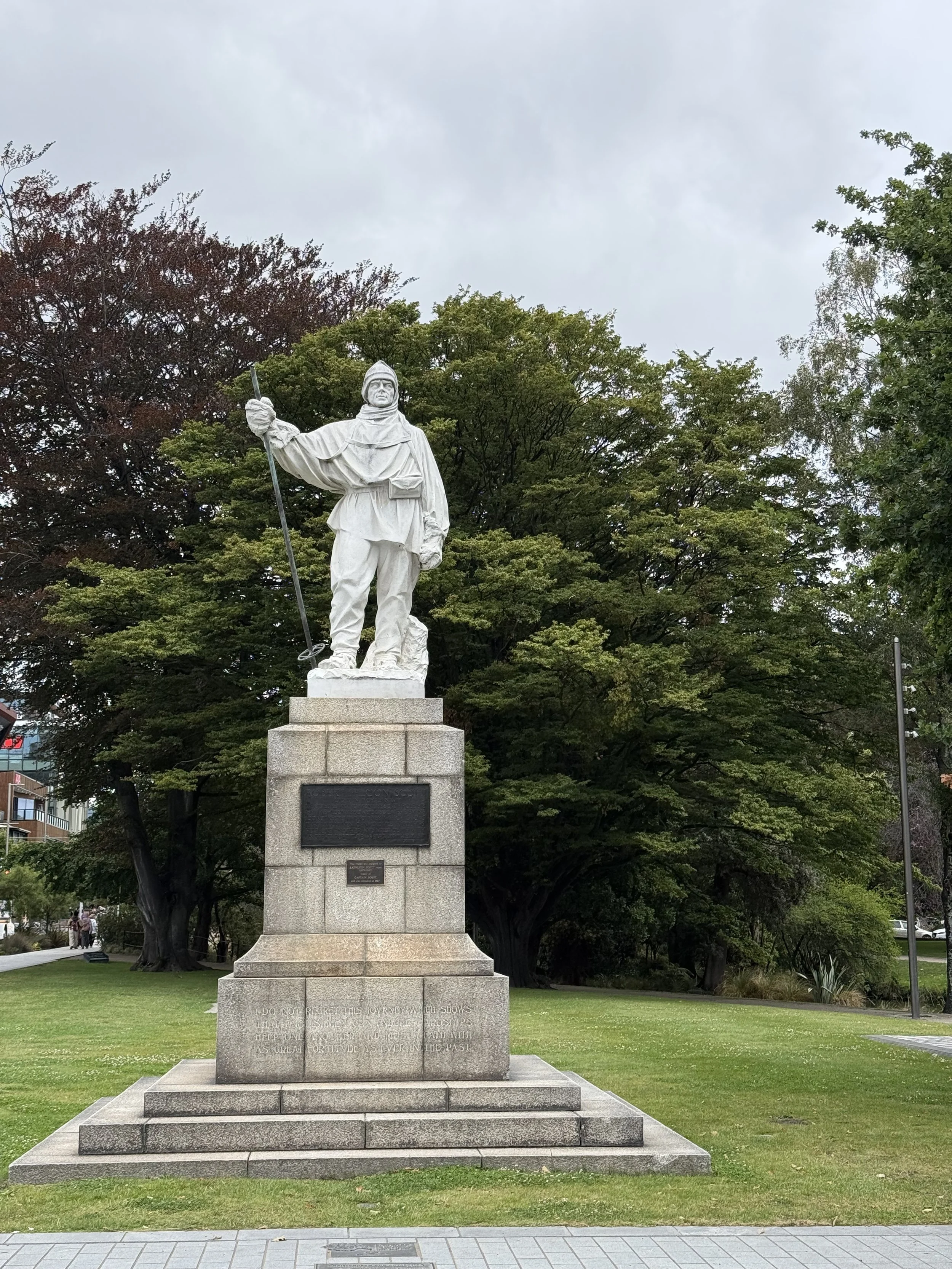
Heading towards Worcester Bridge we passed the statue of Captain Robert Falcon Scott, commemorating his Antarctic expeditions. Christchurch was his base, and his dogs were quarantined on an island in nearby Lyttelton Harbour. As a small aside, we once lived in a village in Warwickshire called Binton, where Scott’s wife Kathleen Bruce’s father had been the rector. The church there has four stained‑glass windows dedicated to Scott and his team, who died during their attempt to reach the South Pole in 1912 - it’s such a small world. The International Antarctic Centre near Christchurch Airport is well worth a visit to learn more about these expeditions.
Crossing Worcester Bridge, we headed towards Worcester Boulevard and the Arts Centre, or Te Matatiki Toi Ora. Just before reaching it, we took in the striking Christchurch Art Gallery Te Puna o Waiwhetū on Montreal Street, a wave‑like contemporary glass building housing both the city’s historic collection and new, emerging artists.
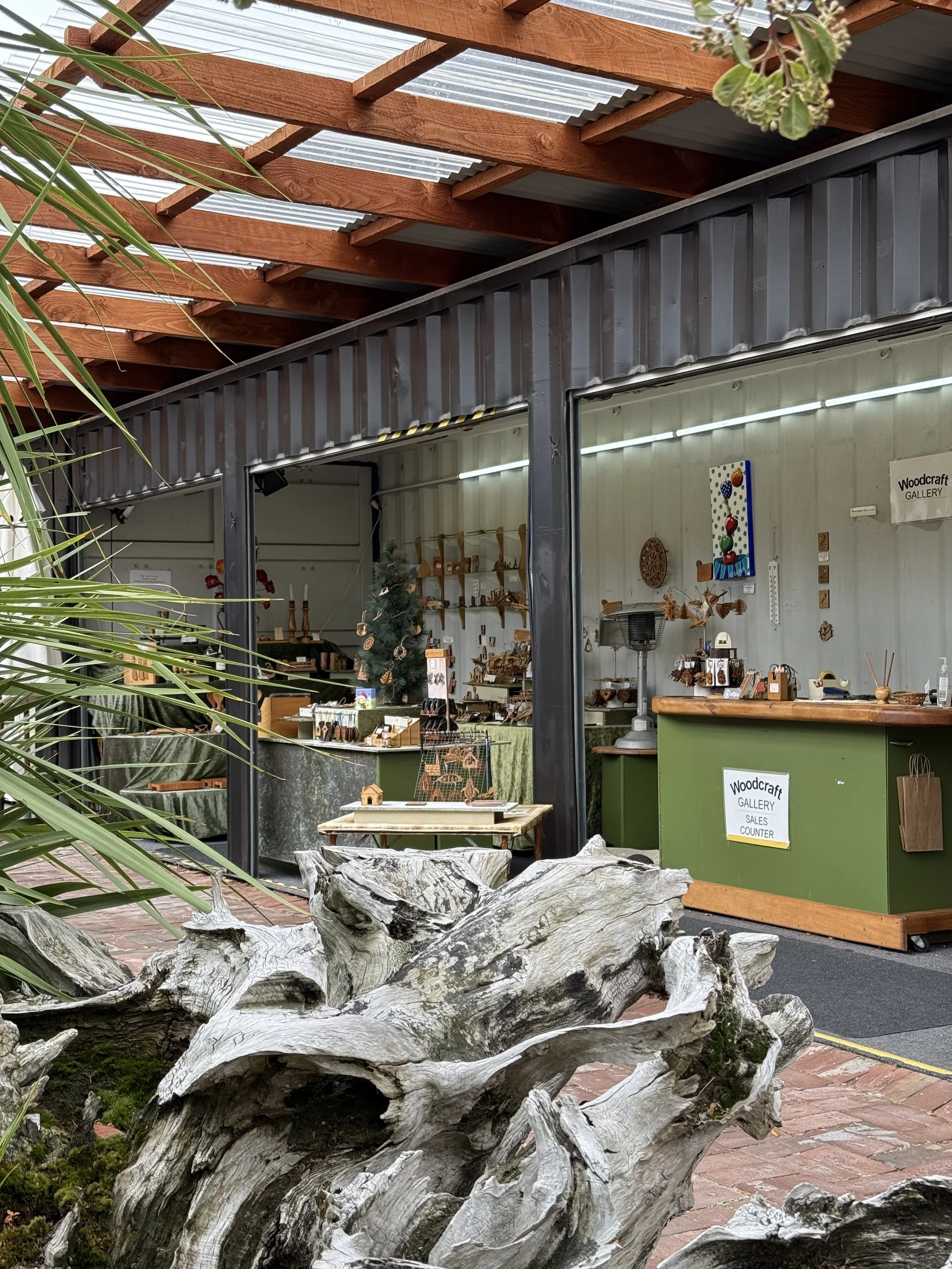
Continuing along Worcester Boulevard, we passed a small collection of craft shops housed in shipping containers, a reminder of how many businesses adapted and continued trading after the earthquakes.
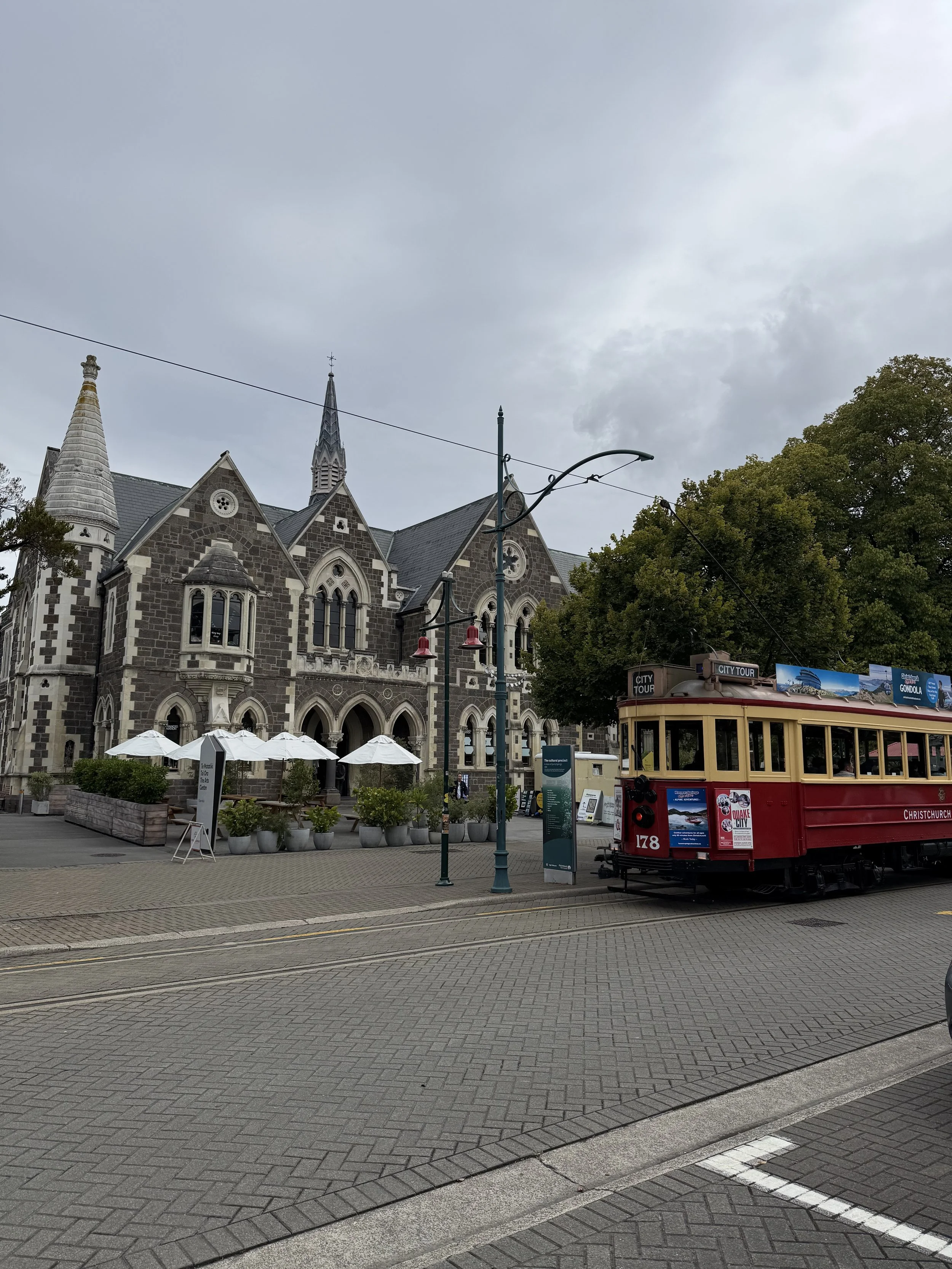
Then, there it was, the beautiful grey‑stone Gothic buildings of the Arts Centre stretched out in front of us. A complex of 23 heritage buildings, the largest collection in New Zealand, is now a mix of artisan shops, cafés, a cinema, hotel, museum, galleries and a wine bar. While parts are still under repair, the restoration is remarkable. Seeing these much‑loved buildings so carefully brought back to life gave us so much joy.
The iconic Christchurch tram still passes the front of the Arts Centre. We even have a painting of this very scene that we brought back to the UK all those years ago, and it was comforting to see that this image had not changed.
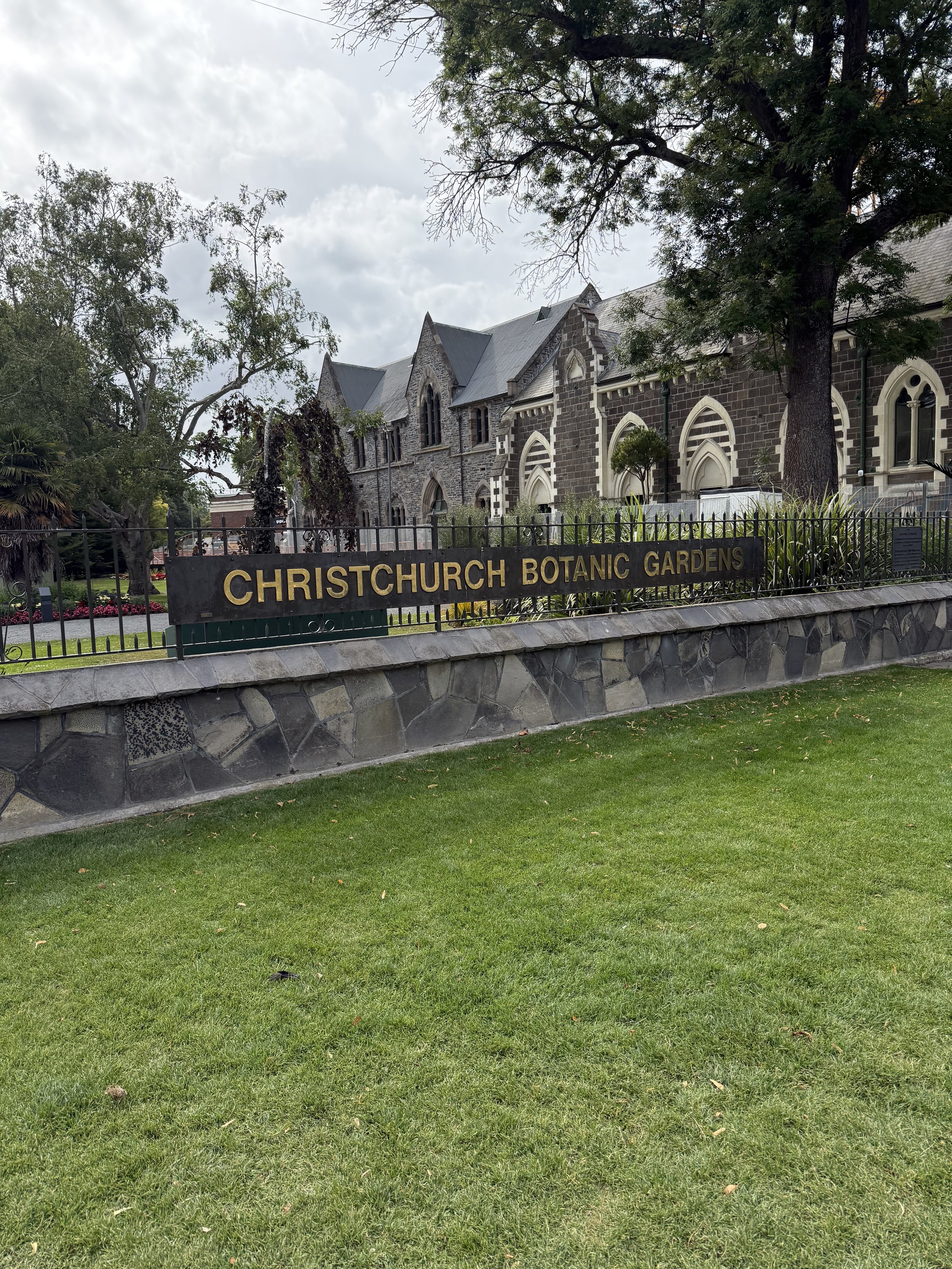
Opposite the Arts Centre is the Christchurch Museum, currently undergoing renovation and due to reopen in 2029. A pop‑up museum on Gloucester Street fills the gap in the meantime. Next door are the Botanic Gardens, a calm and tranquil haven filled with indigenous plants and trees, and another place where you can go punting on the river.
Walking the streets of Christchurch, it is impossible to ignore how profoundly this city was impacted by events that literally rocked its foundations. Wanting to better understand this, we visited Quake City Museum on Durham Street North. It was transformational. Hearing personal stories, seeing photographs of streets we once knew and recognised, and gaining a deeper understanding of the long road to recovery was both humbling and inspiring.
From destruction and grief has emerged a city that has not simply rebuilt, but reimagined itself. Christchurch has embraced the opportunity to create something exciting, creative and forward‑thinking, while retaining and honouring its heritage and Māori culture. It is a city that feels both respectful of its past and optimistic about its future.
On our final night it felt fitting to visit the new Court Theatre, where we watched 9 to 5: The Musical. Beyond thoroughly enjoying the show, we marvelled at the incredible creative space that has been created.
As we prepared to leave New Zealand and the city we once called home, we spent our final morning with Gord, sipping tea and chatting just like old times. As we said our goodbyes, Gord gently pressed a keyring into my hand. “I’d like you to have this,” he said. On it was a picture of Lyttelton Harbour.
It felt deeply symbolic. Lyttelton Harbour was the landing site for the first four settler ships from England. It was also where Gord and Aud made their home when they migrated. Captain Scott quarantined his dogs there, and the February 2011 earthquake was said to have had its epicentre nearby. An unexpected yet fitting reminder of our return to Christchurch, the people and places we love and the direct link to our life in the UK.
Sitting at the airport, waiting to board our flight, we reflected on what returning after nearly thirty years had shown us. The sheer joy of seeing Gord again. The familiarity of a home that had barely changed. The comfort of shared memories, laughter and connection.
And then the city itself, both familiar and unfamiliar, reminding us that change is inevitable. That things evolve, often for the better, though not without pain. That it can be good to look back and reminisce, while accepting that life continues to move forward.
Sharing this amazing place with our adult son, giving him a glimpse into our early married life, felt incredibly special. It was as though we had turned back the pages of our own book, reread an earlier chapter and understood it differently the second time around.
Now we have returned to our present story, ready for the next chapter. Much like Christchurch itself, moving forward with resilience, hope and quiet confidence. We know we won’t leave it quite so long next time before returning to see how the very special city continues to evolve and flourish.
Perhaps that is one of the quiet gifts of this stage of life, the permission to revisit, to reflect, and to notice just how quickly time has passed. To recognise what has remained constant and what has irrevocably changed, often shaped by moments of challenge and uncertainty. Like Christchurch, many of us carry both the scars and the strength of what has come before. Through those experiences, we often discover a deeper resilience, a clearer understanding of ourselves, and the confidence to rebuild, reimagine and step into the next chapter with curiosity, courage and a quiet sense of hope and excitement for what is still to come.
Perhaps we all carry places like this within us, chapters we can return to, not to live there again, but to better understand how they have shaped us and to move forward, changed but ready and eager for our next adventure.
We invite you to join our community and sign up to our monthly newsletter, sent to you on the 8th of each month with new experiences and places to discover.
